EveryEvent Denver

Browse All Events

Find every event in Denver

events

Concerts & Live Music
Festivals
Sports & Recreation
Food & Drink
Arts & Culture
Community
Family & Kids
Nightlife
Comedy
Theater
Popular Destinations
BaliSedonaLos AngelesCosta RicaNew YorkSan FranciscoAustinMiamiJoshua TreeTulum
View All CategoriesView All Destinations

Explore All Features

Powerful tools to grow your events

Platform Features

Smart Dynamic Pricing
Ticket Categories
Assigned Seating
Abandoned Cart Recovery
Visitor Recovery
Donations & Sliding Scale
Affiliate Engine
Ticket Scanner
Coupon Codes
Custom Questions
Ticket Sharing
Upsells & Add-ons
Analytics & Reporting
Email Sequences
Waitlist / Notify / Remind
Explore
Discovery HubArtists & PerformersVenuesKnowledge Base
View All FeaturesAbout Us
PricingBlog
Language
Saved events
Browse All Events

events

Concerts & Live MusicFestivalsSports & RecreationFood & DrinkArts & CultureCommunityFamily & KidsNightlife

Popular Destinations

BaliSedonaLos AngelesCosta RicaNew YorkSan Francisco

Explore

Discovery HubArtists & PerformersVenuesKnowledge Base

Platform Features

Smart Dynamic PricingTicket CategoriesAssigned SeatingAbandoned Cart RecoveryVisitor RecoveryDonations & Sliding ScaleAffiliate EngineTicket ScannerCoupon CodesCustom QuestionsTicket SharingUpsells & Add-onsAnalytics & ReportingEmail SequencesWaitlist / Notify / Remind
View All FeaturesAbout Us
PricingBlog
Log inSign UpEvent Organizers
  • Browse All Events
  • Concerts & Live Music
  • Festivals
  • Sports & Recreation
  • Food & Drink
  • Arts & Culture
  • Community
  • Family & Kids
  • Nightlife
  • All Categories →
  • Boulder
  • Aspen
  • Colorado Springs
  • Vail
  • Breckenridge
  • All Destinations →
  • For Promoters
  • For Artists
  • For Venues
  • For Festivals
  • For Event Spaces
  • For Nonprofits
  • For Bloggers
  • For Speakers
  • Brand Ambassador
  • Case Studies
  • 350K+ Buyer Network
  • Abandoned Cart Recovery
  • Smart Dynamic Pricing
  • Ticket Categories
  • Recurring Events
  • Assigned Seating
  • Affiliate Engine
  • Waitlist / Notify
  • Ticket Scanner
  • Embed Widget
  • Event Syndication
  • Message Center
  • Integrations
  • Reports
  • All Features →
  • About
  • The Ecosystem
  • Blog
  • Glossary
  • Inspiration
  • Help Center
  • Contact
  • API Docs
  • Brand Assets
  • Careers
  • Press
  • Terms of Service
  • Privacy Policy

Events

  • Browse All Events
  • Concerts & Live Music
  • Festivals
  • Sports & Recreation
  • Food & Drink
  • Arts & Culture
  • Community
  • Family & Kids
  • Nightlife
  • All Categories →

Getaways

  • Boulder
  • Aspen
  • Colorado Springs
  • Vail
  • Breckenridge
  • All Destinations →

For Organizers

  • For Promoters
  • For Artists
  • For Venues
  • For Festivals
  • For Event Spaces
  • For Nonprofits
  • For Bloggers
  • For Speakers
  • Brand Ambassador
  • Case Studies

Features

  • 350K+ Buyer Network
  • Abandoned Cart Recovery
  • Smart Dynamic Pricing
  • Ticket Categories
  • Recurring Events
  • Assigned Seating
  • Affiliate Engine
  • Waitlist / Notify
  • Ticket Scanner
  • Embed Widget
  • Event Syndication
  • Message Center
  • Integrations
  • Reports
  • All Features →

Company

  • About
  • The Ecosystem
  • Blog
  • Glossary
  • Inspiration
  • Help Center
  • Contact
  • API Docs
  • Brand Assets
  • Careers
  • Press
  • Terms of Service
  • Privacy Policy
EveryEvent
© 2026 EveryEvent Denver. All rights reserved.
Inspiration

Sport as Meditation: TheYogic Approach to Play

Sadhguru
Sadhguru
May 4, 2023
6 min read

A brief moment of table tennis play offers insight into how yogic philosophy approaches sport, competition, and presence in the moment. Rather than viewing games as purely recreational or achievement-oriented, a contemplative perspective reveals that physical activities can become meditative practices—spaces where the quality of your attention, balance, and responsiveness directly reflects your inner state.

Read · 5 sections

What Makes Play a Spiritual Practice?

The distinction between playing for winning and playing as a meditation is fundamental in yogic philosophy. When you engage in a game like table tennis, several dimensions of consciousness become active simultaneously. Your physical body must respond with precision and timing. Your mind must track the ball, anticipate your opponent's moves, and make split-second decisions. Your nervous system must remain calm under pressure. Most crucially, your sense of self—the ego that identifies with winning or losing—can either dominate the experience or step aside.

In the yogic view, sports become an ideal laboratory for self-observation. A short game reveals patterns: Do you tense up? Do you become frustrated? Do you play defensively or courageously? Are you present with each shot, or lost in calculations about whether you'll win? These questions point to something deeper than athletic performance—they point to your habitual way of engaging with life itself.

The challenge in any physical activity is maintaining what might be called "relaxed alertness." Your body needs enough tension to execute precise movements, but excessive tension blocks flow. Your mind needs focus, but excessive focus creates rigidity. The moment of playing becomes a microcosm of the larger question: How do you move through life while remaining centered?

How Does Balance Show Up in Competition?

Balance in table tennis is literal—your stance, your positioning, your weight distribution all matter. But in yogic terms, balance refers to something more fundamental: the equilibrium between effort and ease, between strategy and surrender, between self and other. When you're locked in competition, your usual relationship to the world becomes visible. Some people immediately assume a defensive posture, preparing for what they expect to lose. Others play with total abandon, heedless of consequence. Neither represents true balance.

A yogi approaching any game—whether seriously or in passing—carries the same principle that governs meditation: witness everything without being controlled by it. You can be fully engaged in the game, executing your best strokes, wanting to win, and simultaneously maintain a thread of inner observation. You're not trying to be calm or "spiritual" about it; you're simply aware of the entire experience as it unfolds.

This balanced engagement reveals something about how presence actually works. Presence is not the same as seriousness. You can be completely present and completely light. In fact, the best players—in any discipline—often describe a state where the game seems to play itself, where they're responding intuitively rather than through conscious calculation. This is what happens when the boundary between observer and observed dissolves temporarily.

What Does a Quick Game Teach About the Present Moment?

Even fifteen seconds of play contains the full spectrum of human experience. Within that brief window, your entire conditioning around winning, losing, competence, and self-image can activate. The person who "doesn't care" about the outcome is often the same person whose body tenses when the score is close. The person who appears relaxed may be suppressing frustration beneath a surface calm.

A game—whether it lasts fifteen seconds or an hour—offers an honest readout of where your consciousness actually resides. If you're truly present, you'll play with a kind of lightness even in focused engagement. If you're lost in outcome or ego, you'll feel the friction, the heaviness, the sense of struggle. There's no hiding from this. Your play is always autobiography.

This is why contemplative traditions have long incorporated movement and sport into spiritual practice. From martial arts to archery to dance, physical activities become mirrors. What makes a "quick game" valuable is precisely that it's quick—there's no time to construct a false self-image, no time to deceive yourself about your state of being. In seconds, your actual consciousness shows itself.

Can Competitive Activities Serve Personal Growth?

The conventional wisdom divides life into compartments: work time, spiritual time, play time, family time. But from a yogic perspective, consciousness is continuous. The same intelligence that orchestrates meditation can operate during competition. The challenge is that most people believe their spiritual state should make them detached from winning or "above" the competitive impulse. This is a misunderstanding.

You don't need to diminish your desire to win or play well. What shifts is your relationship to that desire. You can want to win fully while remaining unbothered by whether you actually do. This is not indifference—it's engagement without attachment. The distinction matters greatly. Indifference means you don't really care, and that usually results in mediocre play. Detached engagement means you bring your full skill and intention to the moment while holding the outcome lightly.

For practitioners of yoga or meditation, sports become a practical testing ground. Can you maintain your inner stability while doing something competitive? Can you access the same quality of presence you find in stillness while your body is moving rapidly and your nervous system is engaged? These are not theoretical questions—they're practical ones that reveal whether your spiritual practice has integrated into your entire being or remains confined to the meditation cushion.

A brief encounter with table tennis—or any sport—becomes valuable precisely because it demands immediate, unrehearsed response. There's no script to follow, no right answer prepared in advance. You must meet each moment on its own terms, with whatever skill and presence you've developed. That's where real learning lives.

Where to Go From Here

If you're drawn to exploring this yogic approach to activity and presence, consider observing your own engagement with games, sports, or any competitive situation. Notice what happens in your body, mind, and emotional state as you play. Do you tense or relax? Do you become self-conscious about how you appear, or do you forget yourself in the activity? What happens if you deliberately try to maintain awareness of your inner state while still playing to win? These direct experiments in your own experience will teach you far more than any theory. The point is not to achieve some perfect detached state—it's to develop the capacity for presence and balance that serves you everywhere, whether you're at the table, on the court, or in your daily life.

Sadhguru
AuthorSadhguru

Indian yogi, mystic, and founder of the Isha Foundation. Through his programs (Inner Engineering, Bhava Spandana, Samyama) and books, he has introduced millions worldwide to a cont…

View profileWebsite
Explore Topics
PresenceSport-meditationBalanceConsciousnessSelf-awareness

Got Questions?

Frequently Asked Questions

Yes, from a yogic perspective, any physical activity becomes spiritual practice when engaged with full presence and awareness. Sports reveal your habitual patterns around competition, ego, and self-image, making them ideal mirrors for self-observation and personal growth.
The yogic approach isn't about suppressing competitiveness but about maintaining inner observation while fully engaged. You can want to win completely while remaining unbothered by the outcome—this is detached engagement, not indifference.
Presence is not the same as seriousness. You can be completely focused and responsive while remaining light and even playful. In fact, the best athletes often describe a state where the activity flows naturally, suggesting presence involves ease as much as engagement.
Competitive activities like sports test whether your spiritual practice has integrated into your whole being. They reveal whether you can maintain inner stability and awareness while your nervous system is engaged and immediate response is required.
A brief game reveals your actual state of consciousness more honestly than longer reflection. There's no time to construct a false self-image—your tension, frustration, responsiveness, and inner calm (or lack thereof) immediately show in how you play.
Physical balance in sports mirrors inner balance: the equilibrium between effort and ease, strategy and surrender, self-concern and present-moment responsiveness. True balance means being fully engaged while remaining centered.
Yes—in fact, the brevity works in your favor. There's no time to hide from patterns or construct false composure. Within seconds, your conditioning around winning, losing, competence, and self-image becomes visible.
Not exactly. Yogic practice develops detached engagement—the capacity to bring full skill and intention to competition while holding the outcome lightly. This is different from indifference, which typically leads to mediocre performance.

Continue Reading

More from Sadhguru

View All
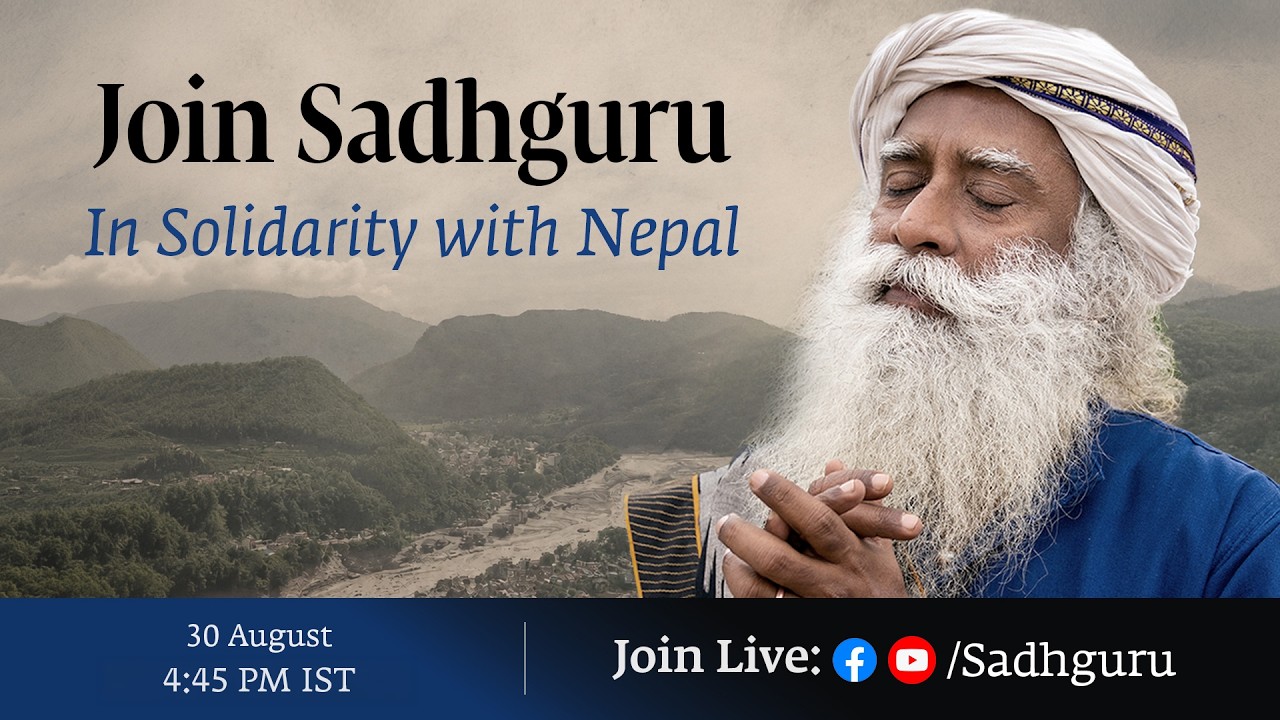
When Grief Becomes a Mirror: What the Nepal Floods Teach
Featured

When Grief Becomes a Mirror: What the Nepal Floods Teach

A flash flood on the Nepal-Tibet border devastated communities and claimed lives. This event became a moment to examine how we respond to tr…

1 min read
Mount Kailash's Hidden Dimensions: Mystical Phenomena Beyond Logic
Featured

Mount Kailash's Hidden Dimensions: Mystical Phenomena Beyond Logic

A 21-year pilgrimage reveals Mount Kailash and Lake Manasarovar as repositories of consciousness and extraordinary life forms defying conven…

1 min read
How Sitting Still Proves You're Already Awakening
Featured

How Sitting Still Proves You're Already Awakening

Most people can't sit quietly without discomfort, but if you can, you're already further along spiritually than you realize. Eckhart Tolle e…

1 min read
The Missing Piece: How Real Thinking Creates Real Results
Featured

The Missing Piece: How Real Thinking Creates Real Results

Most vision boards fail because people skip the actual thinking. Eckhart Tolle reveals the rhythm that unlocks insight and the two distinct …

1 min read

Keep exploring

Continue your journey

More wisdom and gatherings from across the BrightStar directory.

More Articles

Browse the full library of teachings, interviews, and guides.

Back to all articles →

Teachers & Artists

Explore the lineages, musicians, and guides of the conscious world.

Explore artists →

Find an Event

Kirtan, retreats, sound baths, breathwork, festivals — happening soon.

Browse events →