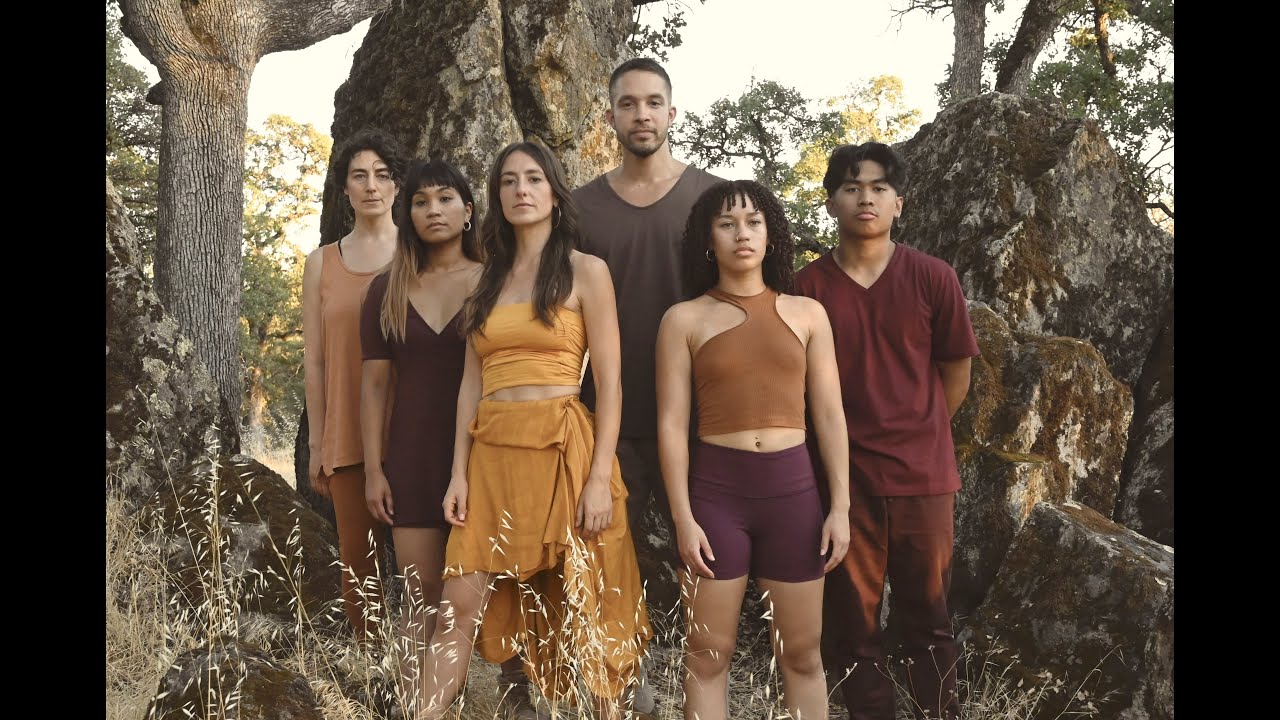
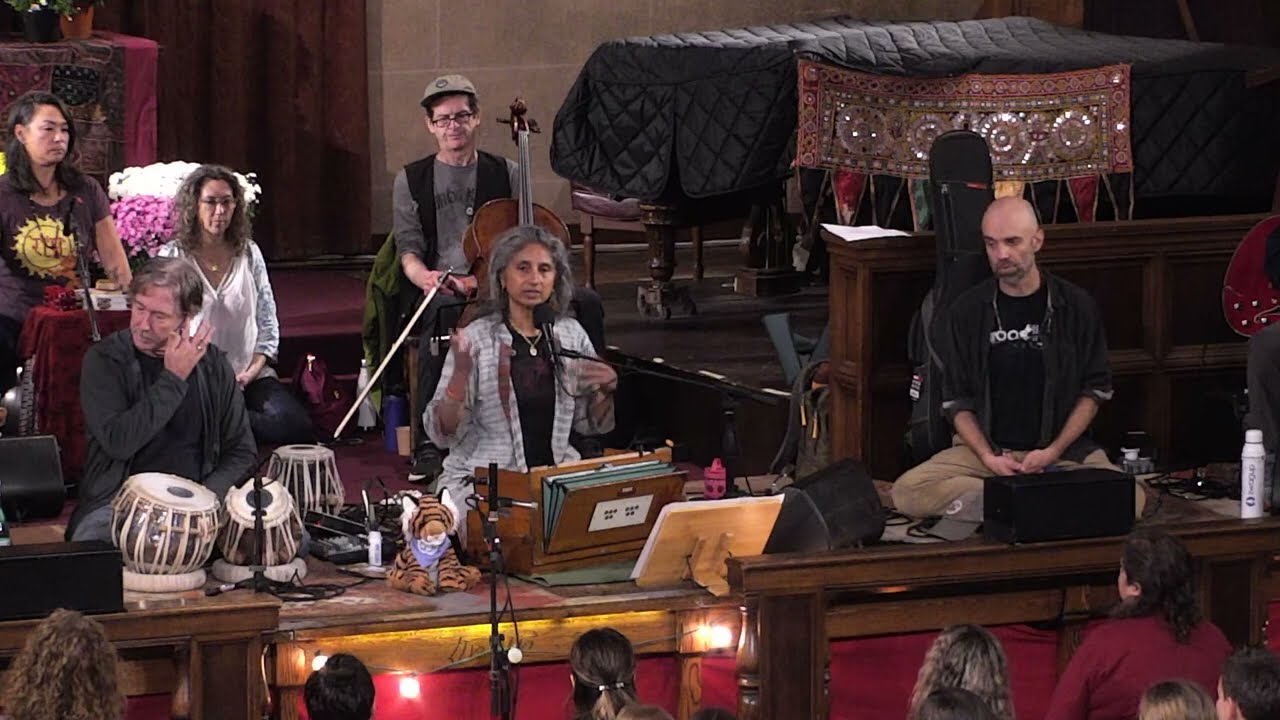
"Stars" is a meditative vocal journey that weaves together longing, surrender, and creative becoming. Through layered, poetic imagery—valleys, frozen waters, dark moons, and warrior hummingbirds—the song traces a path from ache to devotion, exploring the paradox of "letting go of everything" while remaining fully present. Rather than offering answers, the piece invites listeners into the liminal space between desire and acceptance, between striving and grace.
What is "Stars" about?
"Stars" is a meditative composition that uses celestial and natural imagery to map an inner landscape of longing and release. The song doesn't tell a linear narrative; instead, it unfolds as a series of poetic invocations and emotional states. The refrain "I'm lost in your stars / by the light of the dark moon" anchors the listener in a state of conscious disorientation—not confusion, but the deliberate dissolution of ego that meditation and spiritual practice often require. The "dark moon" itself is a traditional symbol in many contemplative traditions representing emptiness, the void, and the fertile ground of possibility.
How does the song structure longing and surrender?
The first verse establishes the spatial and temporal distance the singer must traverse: "across valleys folding, across waters frozen, across the time between my dawn and your setting sun." This imagery positions the speaker as separate from the object of longing, with physical and temporal chasms between them. Yet the language shifts from separation to invitation: "oh tongue, set you free, and oh mind let it be"—a direct address to the body and thinking mind, calling them to release their habitual patterns.
The refrain then introduces grace as the bridge across this distance: "by grace and devotion / by letting go, letting go of everything / by breath as it takes you." Notice the doubling of "letting go"—repetition creates a meditative rhythm, as if the listener is being coached to release not just once, but continuously, with each exhalation. The song doesn't promise that surrender will resolve longing; rather, it suggests that surrender itself is the destination.
What is the meaning of the "warrior hummingbird"?
In the second verse, the singer shifts from passive longing to active becoming: "make me a warrior hummingbird / disarming." This image is rich with paradox. Hummingbirds are known for their precise, rapid flight and incredible hover-capacity—they move forward and backward, up and down, with equal grace. Yet they are also fragile, small, and vulnerable. A "warrior hummingbird" is thus a figure of fierce gentleness, of strength that doesn't dominate but rather darts and dances with precision and care.
The word "disarming" suggests two meanings: first, that the warrior removes weapons (becomes peaceful), and second, that this creature disarms others—melts defenses through its very smallness and elegance. This echoes the song's broader movement from the language of battle ("arrows in the battle of becoming") to the language of devotion and breath.
What does "the place between all longing and letting be" represent?
The lyric "I aim for the place between all longing and letting be" is central to the song's spiritual inquiry. Many contemplative traditions point to a paradoxical state in which desire and acceptance coexist without canceling each other out. This is not the collapse of will into passivity, nor the tyranny of will divorced from acceptance. Instead, it's a third position—a place where the singer can both move toward becoming and simultaneously release attachment to the outcome.
This echoes teachings in Tantra and Zen, where the practitioner learns to hold intention and non-attachment simultaneously. The song coaches this balance through rhythm: the refrain "just be as you are, just do as you do" accepts what is, while the verses invoke transformation ("make me a warrior," "take me surrendered, fill me to spilling over"). The paradox is never resolved—it is held.
How does breath function in the song's spiritual practice?
Throughout the composition, breath appears as both metaphor and actual practice: "by breath as it takes you / by the light of the dark moon." Breath is the bridge between intention and surrender—it happens both autonomously (we don't consciously breathe) and semi-consciously (we can lengthen or shorten our breath). By anchoring devotion to breath itself, the song tethers the listener to present-moment sensation rather than mental elaboration.
The vocalization in the recorded version underscores this. The singer's breath becomes audible, palpable. The extended vocalizations on words like "stars," "stoes," and "st" invite the listener to join in, to vocalize their own breath and presence. This transforms the listening experience into a participatory meditation practice.
What does "speaking honeywine, making wishes star-side" mean?
This line mingles sweetness (honey), intoxication (wine), and manifest intention (wishes). To "speak honeywine" is to speak with the honeyed tongue of devotion, the kind of speech that softens both speaker and listener. "Making wishes star-side" suggests that these wishes are directed upward or outward, toward the cosmos—not as if the stars will fulfill them, but as if aligning with the vast scale of the universe contextualizes and transforms the wish itself. The personal desire becomes cosmically resonant.
Why repeat the refrain so many times?
In the final third of the piece, the refrain "I'm lost in your stars" repeats with increasing frequency, sometimes fragmenting into single words: "lost," "st," "stores," "star." This repetition serves multiple functions. Musically, it creates a trance state through hypnotic iteration—the kind of repetition found in kirtan, mantric chanting, and other devotional practices. Psychologically, it moves the listener from intellectual understanding into embodied experience. The meaning of the words begins to dissolve; what remains is the gesture itself—the returning again and again to "being lost" in the cosmic other.
Where to go from here
If "Stars" resonates, explore Ayla Nereo's broader work on creative voice and spiritual practice. Her courses, Meeting the Muse and Empowered Voice, deepen the inquiry into how longing, creativity, and devotion interweave. The song itself is best experienced as a meditation—return to it repeatedly, letting different lines illuminate different moments in your own inner landscape. Notice which images catch you, which emotions arise, and how the balance between longing and surrender shifts day to day. The song is not a fixed teaching but a living mirror, reflecting back what the listener brings to it.