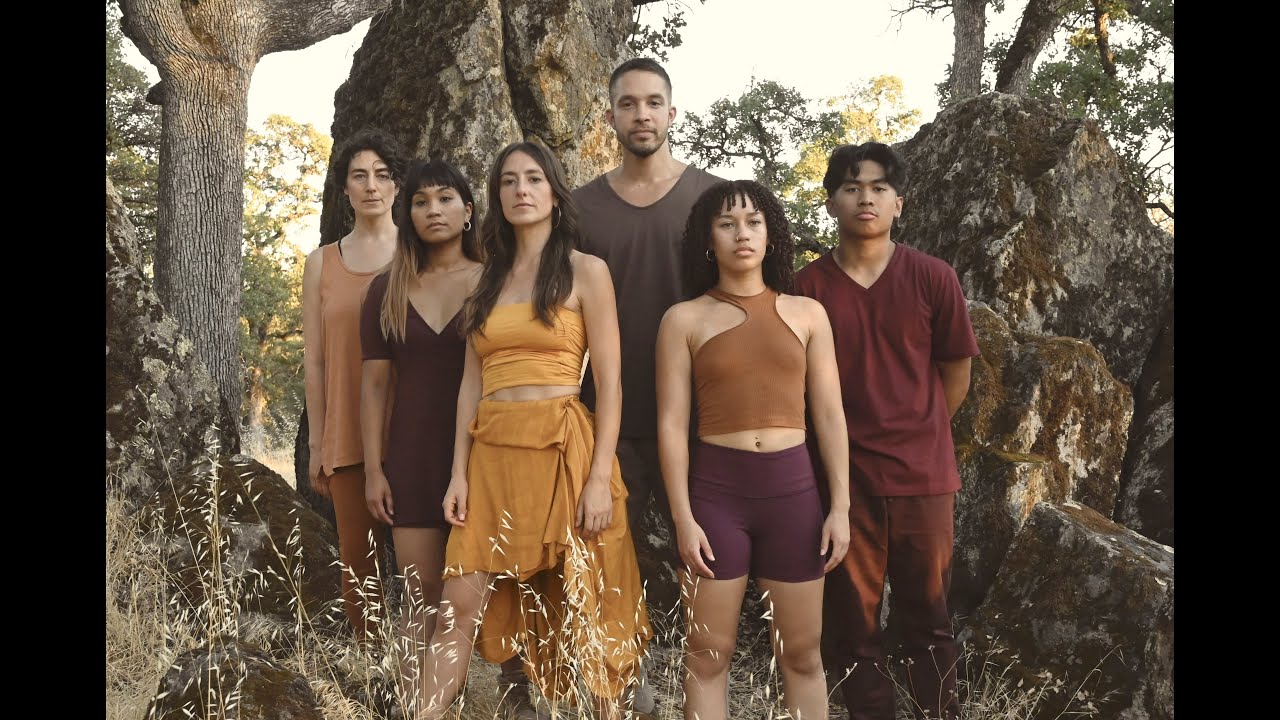
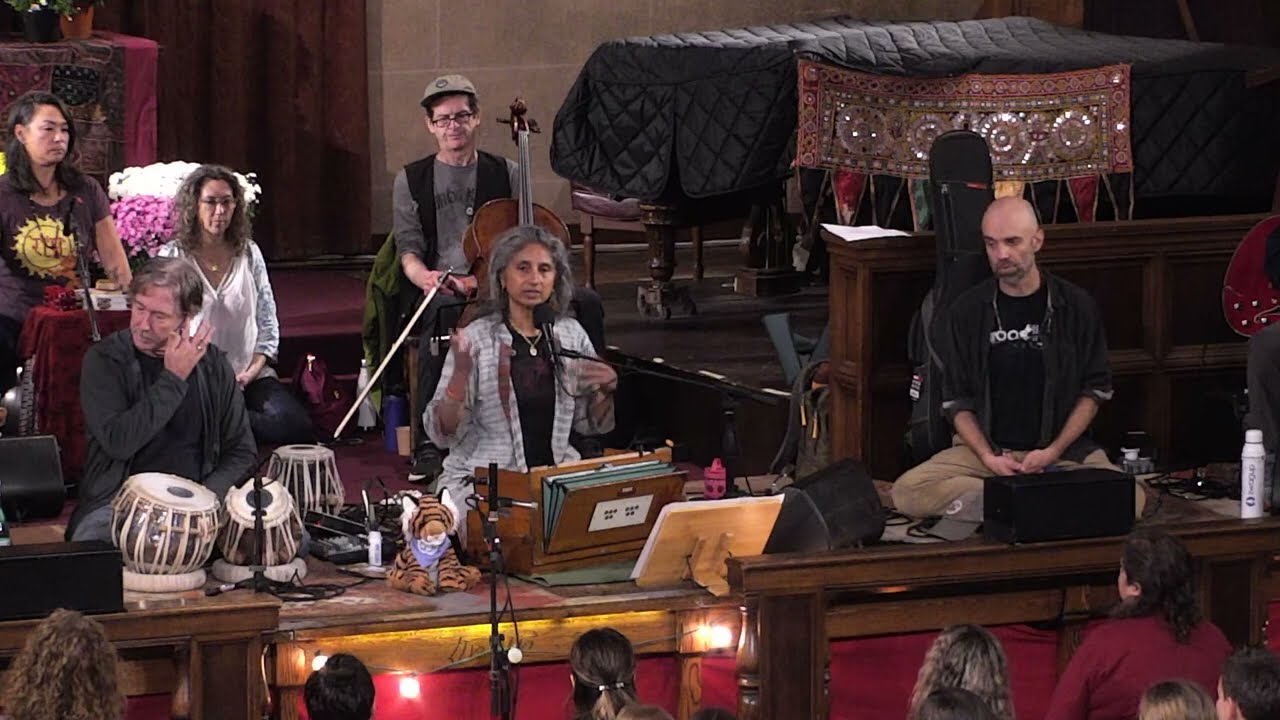
Ayla Nereo's "Show Yourself" (The Human Experience remix) articulates a core distinction between performing for external validation and expressing oneself as an act of inner knowledge and embodiment. The song's central refrain—"I do not show this skin for you, I show myself to know myself"—positions the voice and body as vehicles for self-discovery rather than performance, rooted in the earth and collective humanity rather than individual ego. The work invites listeners to examine their own relationship to authentic expression and to recognize that showing up fully is both a spiritual practice and a birthright.
What Is the Core Message of "Show Yourself"?
At its heart, "Show Yourself" grapples with a paradox central to human existence: the tension between performing for others and being authentic for oneself. The lyrical core—"I do not show this skin for you, I show myself to know myself"—establishes a clear philosophical stance. This is not about rejection of relationship or witness; rather, it is a reordering of purpose. When Nereo sings "I show for the earth from which I came, my prayers for you to do the same," she reframes the act of showing up as an offering rooted in collective belonging rather than individual ego satisfaction.
The song unfolds within the metaphor of "new life is birthing" and the speaker "peeking out" from behind protective layers. This suggests a process of emergence—the gradual revealing of what has been hidden or protected. The imagery of "delicate thrashing" and "doubled and breaking" speaks to the difficulty of this process. It is not gentle or passive; it is the work of coming alive, of breaking through what has constrained authentic expression.
Nereo's musical arrangement—described as "a mesmerizing fusion of ethereal sounds and heartfelt lyrics"—creates a sonic container that allows these ideas to land not just intellectually but somatically. The voice itself becomes the message; the way words are sung enacts the content they describe.
How Does the Body Connect to Authentic Self-Expression?
The repeated phrase "I do not show this skin for you" is crucial. It grounds the act of expression in the body—"this skin"—not in disembodied performance or mental construct. The body, in Nereo's framing, is both the vehicle of expression and the primary beneficiary of that expression. When she says "I show myself to know myself," she is suggesting that embodied self-revelation is an epistemological act—a way of knowing.
This aligns with somatic and contemplative traditions that hold that we cannot truly know ourselves in abstraction; we know ourselves through the direct experience of inhabiting our bodies, feeling our breath, hearing our own voice. The act of showing, singing, and expressing becomes a method of self-recognition. This is distinct from the ego's desire to be seen and admired. It is seeing oneself.
The imagery of being "your mirror and likeness, your servant in highness, the earth one being your body, the queen" suggests a recognition of both the transcendent and the embodied within a single being. This is not a rejection of the divine or spiritual; rather, it is an insistence that the divine is not separate from the body but intimately woven into it. To show the body, then, is to show the earth, the kingdom, the sacred within the material.
What Role Does Witness and Relationship Play?
While the song emphasizes "I show myself to know myself," it does not advocate for solipsistic isolation. The refrain includes "my prayers for you to do the same," addressing the listener directly. This creates an implicit relationship: the speaker's authentic expression is offered as an invitation or mirror for others to find their own authenticity.
The phrase "you whisper sweet something to the one you are saving" introduces an image of care and mutual rescue. In this framing, showing up authentically is itself a form of service to others, not because it flatters them or gives them what they want, but because authentic presence is what heals and transforms. When one person shows themselves without apology, they create permission for others to do the same.
This reframes the relationship between performer and audience, or between self and other, in a way that dissolves the hierarchy often present in those dynamics. You are not showing yourself FOR the other; you are showing yourself, and in that showing, you are present with the other. The witness benefits not because they are the focus, but because they are in proximity to authentic presence.
What Does It Mean to "Take All We've Got and Will Spill It"?
The song's middle section introduces a shift in tempo and energy. "I take all we've got and will spill it like comfort out, all the inside down, all the corners." Here, Nereo moves from the paradox of self-expression to the act of generosity or overflow. "Spilling it like comfort out" suggests abundance, vulnerability, and the sharing of one's inner resources without reservation.
"All the inside down, all the corners" implies a thoroughness to this sharing—nothing held back, every hidden part brought to light. This is not strategic vulnerability performed for effect; it is radical openness born of the realization that keeping the self contained and hidden is ultimately more painful than exposure.
The image of "comfort" is particularly telling. When we spill our authentic selves, we offer comfort—to ourselves, to those around us, to the collective. This inverts the usual narrative of vulnerability as weakness; instead, it is the pathway to genuine support and connection.
How Does the Earth Feature in the Song's Spiritual Framework?
References to "the earth," "the body," and "the queen" are woven throughout the song in a way that suggests they are not separate categories but expressions of the same reality. When Nereo sings "show for the earth from which I came," she anchors the act of authentic expression in a material, embodied reality. This is not an escape into abstraction or spirit; it is a deeply grounded spiritual practice.
The earth, in this context, represents both literal nature and the body as nature—the animal, the sensual, the felt dimension of existence. To serve the earth is to honor the embodied self and to recognize the self as part of a larger living system. This echoes indigenous and earth-based spiritual frameworks where the human body is understood not as separate from or superior to nature, but as an expression of it.
By making the earth and the body the objects and beneficiaries of authentic expression, the song offers an alternative to spiritual traditions that valorize transcendence over embodiment, spirit over matter. Here, showing yourself fully is itself a spiritual act because it is an act of honoring the sacred within the material, the divine within the body and earth.
What Is the Invitation at the End?
The song's repeated closing—"I do not show this skin for you, I show myself to know myself, show for the earth from which I came, my prayers for you to do the same"—functions as both affirmation and invitation. By repeating this statement multiple times, Nereo embeds it not just intellectually but rhythmically and emotionally into the listener's consciousness. The repetition itself enacts the discipline of remembering, of returning again and again to this truth.
The phrase "my prayers for you to do the same" shifts the song from a solitary declaration to a collective call. It acknowledges that authentic expression is not a solo achievement but a practice we undertake in relationship with others, with the earth, with the sacred. The song becomes both mirror and invitation—it shows what authentic presence looks like and invites the listener to discover their own version of it.
Where to Go From Here
If this song resonates, consider exploring Ayla Nereo's broader body of work, including her courses "Meeting the Muse" (a free 5-day journey designed to help unlock voice and creative liberation) and "Empowered Voice" (a more comprehensive system for embodying authentic vocal expression). These resources extend the philosophical inquiry embedded in "Show Yourself" into practical and embodied practices.
You might also reflect on where authentic self-expression appears and disappears in your own life. What conditions allow you to "show yourself"? Where do you withhold? The distinction Nereo draws—between performing for approval and expressing for the sake of knowing and honoring yourself—is not abstract but immediately applicable to your own voice, body, and presence. How would your relationships, your work, your sense of self shift if you began to show yourself not for others, but to know yourself?