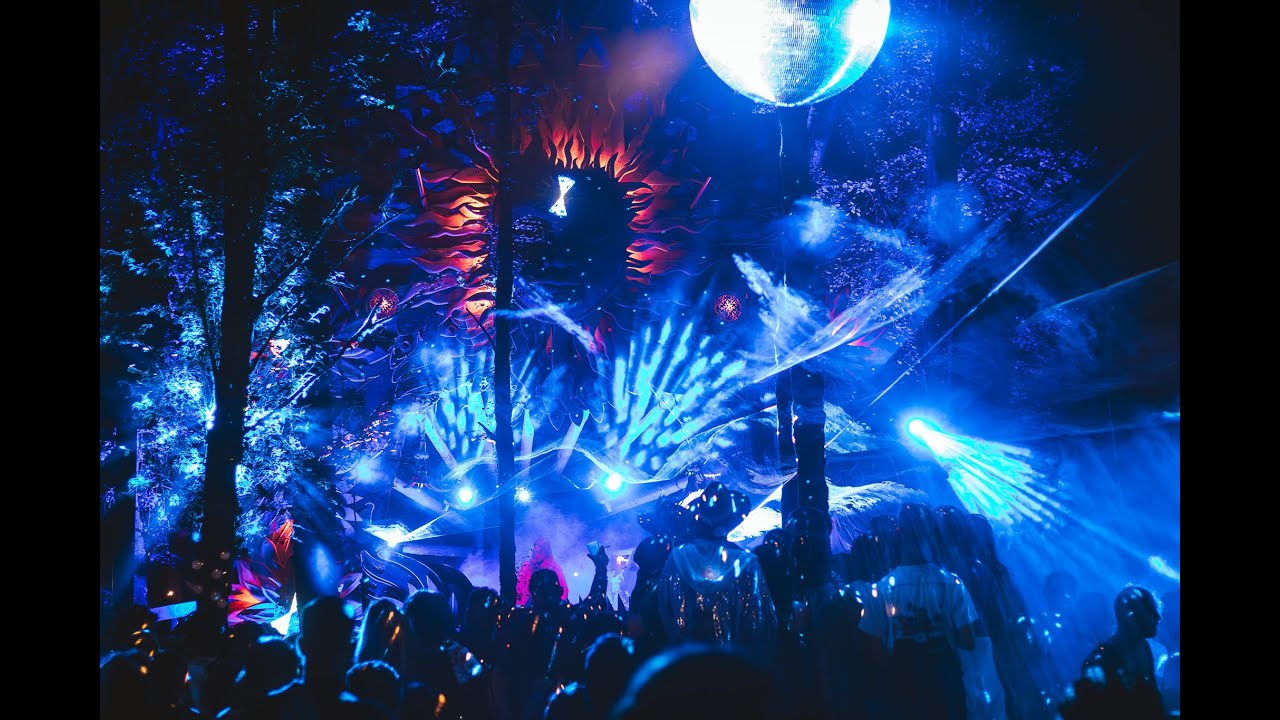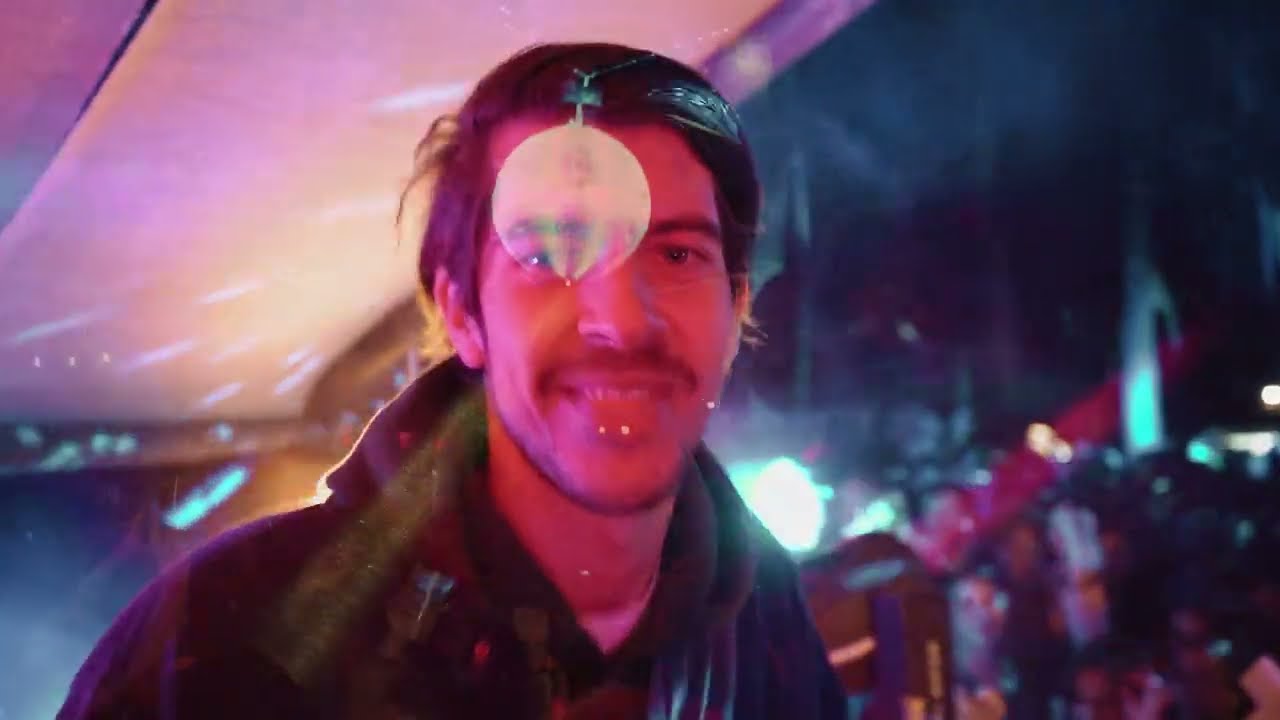
The GOAT Community Festival 2023 film documents a fundamental human need: the capacity to step away from ordinary life, silence external noise, and reconnect with inner truth. Through mountain climbing and collective gathering, participants access the depth of their own thoughts, hear the whispers of true desires and ambitions, and experience a profound shift that comes only when the superficial layers fall away. This piece explores how detachment creates the conditions for genuine self-knowledge and why community spaces designed for disconnection serve as essential containers for that reconnection.
Why Do We Need to Disconnect?
In the film's opening sequence (0:05), a participant reflects on climbing the mountain and a realization that emerged: "I understood the need I had to disconnect" (0:10). This statement captures something most people recognize but rarely articulate clearly. Disconnection is not escapism or avoidance—it is a recognized human need, as fundamental as the need for sleep or nourishment. The participant goes on to clarify: "a strong desire to live disconnect from the outer world and reconnect with me" (0:10–0:16). The paradox is immediate and instructive: to live more fully, we must temporarily step outside the machinery of ordinary living.
The outer world carries constant demands. Work cycles, social media feeds, family obligations, financial pressures, and the ambient noise of collective anxieties all shape how we move through time. Most people never pause long enough to ask whether these demands align with what they actually want. The festival structure—a bounded event in nature, removed from daily infrastructure—creates the physical and temporal conditions for that pause.
What Happens When Superficiality Falls Away?
The film articulates a clear mechanism: "as we detach ourselves from The Superficial we open ourselves up to the profound" (0:18–0:29). This is not metaphorical. The superficial layer refers to the transactional, performative, and habitual modes of being that most environments require. You show up as your job title, your social role, your family function. You speak in familiar scripts. You protect a managed image. This is not wrong—it is how humans navigate shared spaces efficiently. But it comes at a cost: the suppression of what lies beneath.
When that layer is temporarily removed—when you are surrounded by strangers who share no history with you, when there are no credentials to perform, when the setting itself does not reward productivity or status—something shifts. The nervous system downregulates. The part of the mind that was scanning for social threat can rest. And in that rest, other frequencies become audible.
How Does Silence Reveal What We Actually Want?
The film moves to a deeper claim: "it is within these moments of Detachment that we can dive into the depth of our own thoughts it is in this silence that we hear the Whispers of our true desires Ambitions and Passions" (0:85–0:119). This passage identifies silence—not as absence, but as a listening space—where internal signals that are normally drowned out become perceptible.
Most people do not know what they actually want. They know what they have been told they should want, what their family modeled, what their education prepared them for, what their peer group values. Underneath those layers sits a different set of signals: the quiet insistence of a particular interest, a way of being that feels more true, an ambition that contradicts the safe path, a passion that has no obvious market value. These whispers are always present, but they are inaudible in noisy environments. A festival that deliberately creates silence—both literal quiet and the absence of performative demand—creates the acoustic conditions for those whispers to be heard.
What Is the Role of Community in This Process?
The GOAT Community Festival brings together individuals in a shared geographic and temporal space. The word "community" here does not mean lifelong bonds or ongoing accountability—it means a temporary collective container. What makes that container effective is that it holds multiple people simultaneously doing the same thing: disconnecting, listening, reconnecting. This creates a field effect. When everyone around you is in a mode of genuine inquiry rather than performance, the permission for your own inquiry deepens. There is less social energy spent on impression management and more available for the internal work.
The film's invitation at the close—"I hope you get to experience this incredible feeling too see you in 2024" (0:180–0:191)—suggests this is not a one-time event but a recurring rhythm. The fact that it is scheduled annually (July 3-8) acknowledges something real: for most people, a single retreat or festival creates a shift, but the return to ordinary life gradually reconstructs the superficial layers. The cycle of disconnection, reconnection, return, and re-disconnection becomes necessary practice.
What Makes a Festival Space Different From Everyday Life?
The festival is defined by its boundaries. It has a start date and an end date. It has a geography separate from where you live and work. It has explicit permission structures—permission to not be productive, permission to rest, permission to explore questions that have no material payoff. These are not luxuries; they are antidotes to the default mode of contemporary life, which assumes all time should be monetizable and all development should be measurable in market terms.
The mountain climbing mentioned in the opening is significant. Physical elevation, the exertion required to reach it, and the vantage point it offers all serve the internal work. The body cannot climb and simultaneously maintain shallow patterns of thought. Movement in nature creates a different neurochemical profile than movement in built environments. The festival leverages these physical facts.
Where to Go From Here
If you recognize the need described in this film—the pull toward disconnection and deeper reconnection—the immediate step is to locate or create a bounded container for that work. This might be the GOAT Community Festival itself (next offering July 3-8, 2024), or it might be another gathering, retreat, or practice space designed with similar intention. The key is that it must be genuinely separate from your ordinary life, structured to reduce performative demand, and held by others who are also committed to the work of listening inward.
Between such events, smaller practices can sustain the signal. Regular silence—a morning meditation practice, a weekly walk in nature without a phone, a periodic day of reduced external input—keeps the capacity for inner listening alive. The whispers do not stop when you return home; they simply become quieter again. Hearing them requires practice.
The film's central insight is that disconnection is not the opposite of living fully—it is a prerequisite for it. Most of what we are taught about success and fulfillment is built on the assumption that more engagement, more productivity, more connection is always better. The festival suggests the opposite: that some of the most valuable moments come when we subtract, step back, and create space for the inner world to speak. That is an invitation worth accepting.