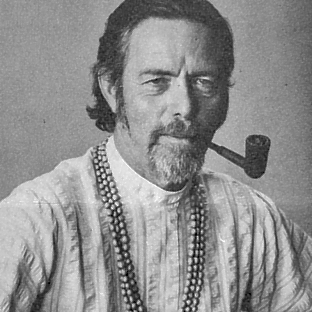
Waves of Unity: Understanding Our Place in the Universe
Alan Watts invites us to contemplate the profound interconnectedness of existence with his evocative assertion that "You are a function of what the whole universe is doing, in the same way that a wave is a function of what the whole ocean is doing." This statement urges us to recognize that our individual lives are not isolated phenomena but rather integral parts of a vast, dynamic whole. The implications of this understanding are significant, as they challenge the illusion of separateness that often governs our thoughts and actions.
In a world that frequently emphasizes individualism and personal achievement, Watts's words serve as a gentle reminder of our inherent connection to the cosmos. By likening our existence to a wave in the ocean, he encourages us to see ourselves as expressions of a greater reality, shaped by the currents of life that flow around us. This perspective invites us to embrace a sense of unity and purpose, fostering a deeper appreciation for the intricate web of relationships that define our lives.
The image / the metaphor
The imagery of a wave and the ocean is rich with meaning, evoking a sense of movement, fluidity, and transformation. A wave is not a standalone entity; it is born from the ocean's depths, shaped by the wind, and ultimately returns to the sea. This metaphor highlights the interplay between individuality and universality, suggesting that while we may perceive ourselves as distinct beings, we are fundamentally shaped by the larger forces at play in the universe. The verbs chosen—"is a function of"—imply a dynamic relationship, emphasizing that our existence is not static but rather a continuous process of becoming.
In the speaker's tradition
Alan Watts, a prominent figure in the popularization of Eastern philosophy in the West, draws heavily from Zen Buddhism and its teachings on unity and interconnectedness. Concepts such as *sunyata* (emptiness) and *dharma* (the natural order of the universe) resonate deeply with his assertion. In Zen, the understanding that all things are interdependent is foundational; it teaches that our individual identities are shaped by the myriad relationships we engage in. This perspective aligns with Watts's view that our existence is not separate from the universe but rather a manifestation of its ongoing processes.
In his writings, Watts often references the *Tao Te Ching*, a classic text that echoes similar sentiments about the nature of existence. The Taoist idea of *wu wei*, or effortless action, suggests that by aligning ourselves with the natural flow of the universe, we can find harmony and purpose. This connection between our individual lives and the greater cosmos is a recurring theme in both Zen and Taoist thought, reinforcing the notion that we are all part of a larger, interconnected whole.
Living the teaching
Consider a modern scenario where this teaching resonates: a busy urban professional navigating the demands of work and personal life. In the hustle and bustle of daily routines, it is easy to feel isolated and overwhelmed, as if one is merely a wave crashing against the shore. However, by embracing the understanding that one's actions and emotions are influenced by the larger currents of society, one can cultivate a sense of belonging and purpose. This shift in perspective allows for a more compassionate engagement with oneself and others, recognizing that we are all navigating similar waves of experience.
In relationships, this teaching can manifest in moments of conflict or misunderstanding. When faced with a disagreement, one might reflect on the idea that both parties are shaped by their unique experiences and the broader context of their lives. By acknowledging this interconnectedness, it becomes possible to approach the situation with empathy and understanding, rather than defensiveness. This practice of seeing oneself as part of a larger ocean fosters deeper connections and promotes healing, allowing love and compassion to flow more freely.
A reflection
As we contemplate Watts's profound insight, we are invited to ask ourselves: "In what ways do I recognize my connection to the universe and the people around me?" This question encourages a deeper exploration of our relationships and the forces that shape our lives. By reflecting on our role as waves within the ocean of existence, we can cultivate a greater sense of unity, purpose, and compassion in our daily lives.



Join the BrightStar Community
Stay connected with daily inspiration, event announcements, and community wisdom