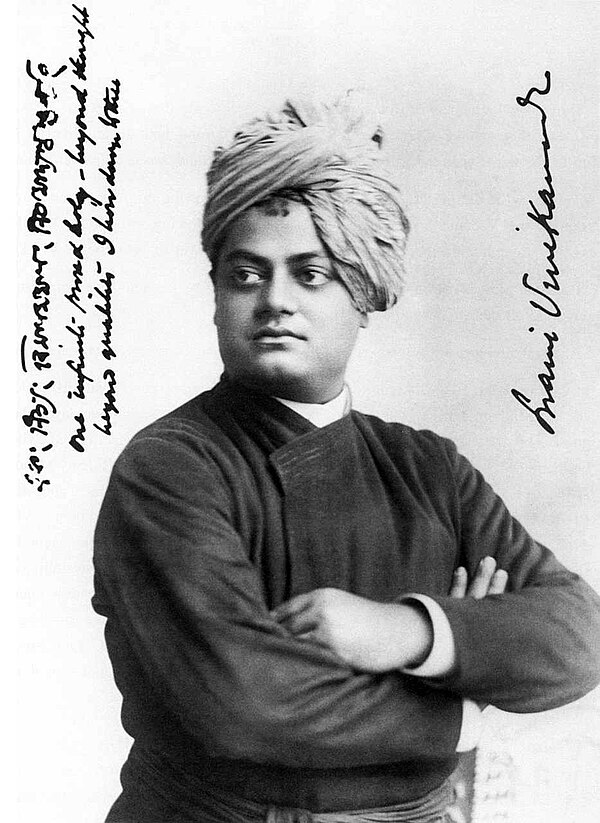
The Freedom to Flourish: Exploring Swami Vivekananda's Insight
Swami Vivekananda's assertion that "liberty is the first condition of growth" invites us to consider the profound relationship between freedom and personal development. In a world often constrained by societal expectations, internal fears, and external pressures, this quote serves as a clarion call to embrace the liberating power of autonomy. It suggests that true growth—whether spiritual, emotional, or intellectual—can only occur when we are free to explore our own paths, unencumbered by limitations that stifle our potential.
Delving deeper, we recognize that liberty is not merely the absence of physical constraints; it encompasses a broader existential freedom that allows us to express our true selves. This freedom is essential for nurturing creativity, fostering resilience, and cultivating a sense of purpose. In essence, Vivekananda's words challenge us to reflect on the barriers we impose upon ourselves and the ways in which we might reclaim our liberty to grow, both individually and collectively.
The image / the metaphor
The imagery in Vivekananda's quote evokes a sense of expansiveness, suggesting that growth is akin to a plant reaching for sunlight. The word "liberty" conjures visions of open skies and unbounded horizons, while "growth" implies a dynamic process of unfolding potential. The verbs chosen—"is" and "condition"—indicate that freedom is not merely a backdrop for growth but a fundamental prerequisite, a fertile soil from which the seeds of our aspirations can sprout.
Going deeper into the metaphor, we can envision liberty as the air that nourishes our growth, allowing us to breathe freely and expand our consciousness. Without this essential element, we risk becoming stunted, trapped in a cycle of conformity and fear. The interplay between liberty and growth suggests a symbiotic relationship, where the former creates the conditions necessary for the latter to flourish, much like a garden that thrives only when it is tended to with care and freedom from weeds.
In the speaker's tradition
Swami Vivekananda's teachings are deeply rooted in the Hindu tradition, where concepts such as dharma (righteous duty) and moksha (liberation) play pivotal roles. The notion of liberty aligns with the idea of self-realization, where individuals are encouraged to pursue their true nature and purpose without the shackles of societal norms. This pursuit of freedom is not merely a personal endeavor; it is a collective awakening that resonates with the principles of bhakti (devotion) and prajna (wisdom), emphasizing the interconnectedness of all beings.
In Vivekananda's own writings, particularly in "Karma Yoga," he elucidates the importance of selfless action as a means to attain spiritual freedom. He posits that when individuals act without attachment to the fruits of their labor, they liberate themselves from the bondage of desire and ego. This liberation, in turn, fosters an environment conducive to growth, allowing individuals to transcend their limitations and contribute meaningfully to the world around them.
Living the teaching
Consider a modern scenario where an individual feels trapped in a job that stifles their creativity and passion. This person may yearn for the liberty to pursue a career aligned with their true interests but feels paralyzed by financial obligations and societal expectations. By recognizing that their growth is contingent upon reclaiming their freedom, they may begin to explore alternative paths, whether through further education, side projects, or even a leap into entrepreneurship. This journey toward liberation can ignite a transformative process, leading to personal fulfillment and professional success.
In the realm of relationships, the teaching of liberty as a condition for growth manifests in the importance of mutual respect and autonomy. A partnership thrives when both individuals feel free to express their thoughts, emotions, and aspirations without fear of judgment or repression. In moments of conflict, embracing this principle can lead to deeper understanding and healing, as each partner learns to honor the other's freedom while navigating the complexities of their shared journey.
A reflection
As we contemplate Swami Vivekananda's profound insight, we are invited to reflect on our own lives: What barriers to freedom might we be unconsciously upholding that hinder our growth? In what ways can we cultivate a greater sense of liberty, both within ourselves and in our relationships with others? These questions serve as a starting point for a deeper exploration of our potential, urging us to embrace the transformative power of freedom as we embark on our unique paths of growth.



Join the BrightStar Community
Stay connected with daily inspiration, event announcements, and community wisdom