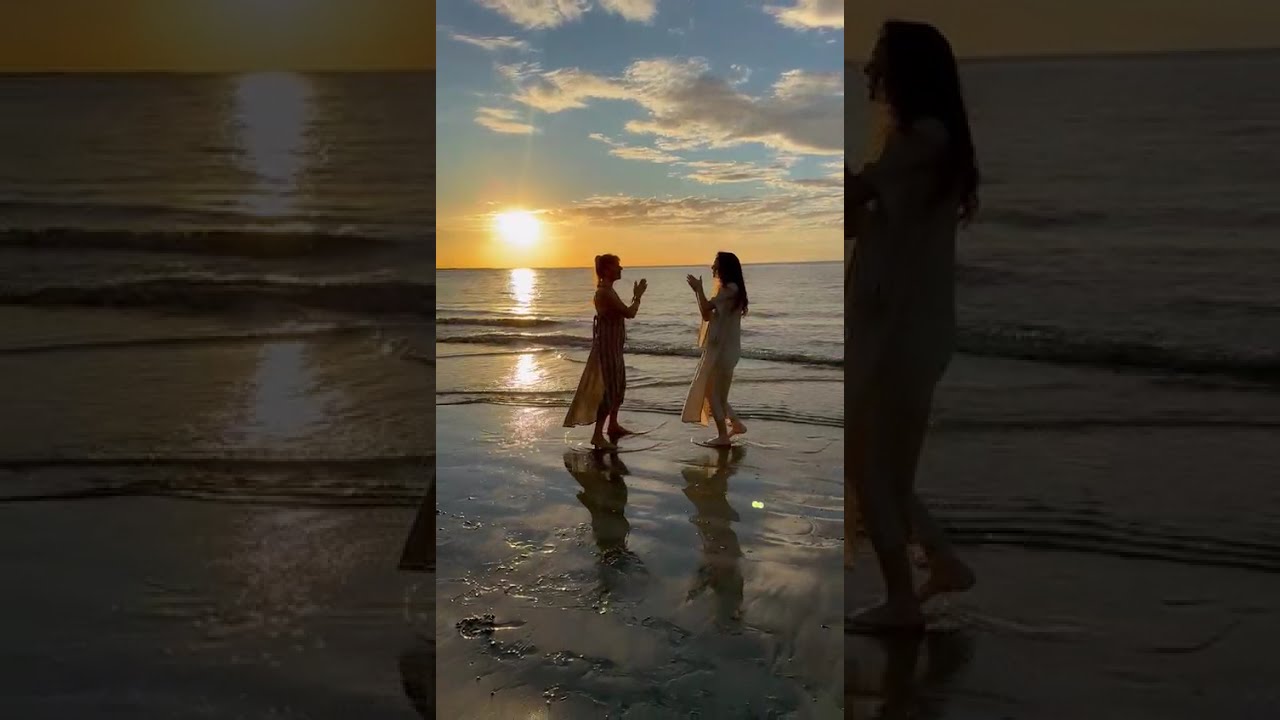
In this brief rehearsal video, Donna De Lory and Niki Haris practice "Rain," a devotional vocal piece centered on the metaphor of waiting on a mountain for spiritual presence. The song explores themes of longing, receptivity, and the call-and-response dynamic between two voices, with lyrics that frame patience and emotional openness as pathways to connection.
What Is "Rain" in the Context of Devotional Music?
"Rain" appears here as a spiritual metaphor rather than a literal weather phenomenon. The song uses the image of standing on mountain tops—a traditional place of spiritual practice and solitude—as the setting for a deeper human experience: waiting for presence, for recognition, for the call of one's name. This is the language of devotional music, where natural imagery becomes a doorway into inner states of longing and receptivity.
The lyrical architecture is simple but layered. The singer stands exposed on high ground, waiting. The object of that wait is someone or something that will "bring the rain"—that will fulfill the longing, respond to the vulnerability of standing alone. This imagery has roots in many spiritual traditions where mountains represent both isolation and transcendence, and water represents life force, grace, or the presence of the Divine.
How Do Two Voices Create Meaning in This Piece?
Donna De Lory and Niki Haris are practicing a duet version of "Rain," and the vocal interplay is central to the song's emotional work. When one singer holds a line—"I stand out on the mountain tops"—the other voice enters with anticipation or response. This call-and-response structure, common in kirtan and devotional music, mirrors a fundamental human pattern: the longing for recognition and the answer that comes.
The use of two voices transforms what could be a solitary lament into a conversation. One voice expresses vulnerability and waiting; the other reinforces it, harmonizes with it, or answers it. This creates a sense that the longing itself is being witnessed and held. In devotional contexts, this technique often represents the dialogue between the individual soul and the greater presence it seeks.
What Does "I Feel It Coming Down" Mean in the Lyrics?
The phrase "I feel it, it's coming down" [at approximately 42 seconds] represents the moment of response within the song. After the patient waiting described in the first verse, there is a shift toward sensing, toward feeling the arrival of what was called for. The word "down" is significant: the rain—whether understood literally or metaphorically—descends from above, from the realm of the mountain tops toward the body and heart of the singer.
This is not an intellectual knowing but a somatic experience: "I feel it." The body registers before the mind comprehends. This emphasis on felt sense is crucial in devotional music, where the goal is not doctrinal belief but direct experience of presence, connection, or grace.
Why Practice a Live Version of This Song?
At the opening of the video [1 second], De Lory mentions "we got to do that live version," indicating this is a rehearsal preparing for a performance. Practicing the live version requires different attention than recording: the singers must coordinate breath, timing, and emotional presence in real time, without the possibility of overdubs or correction.
For a song as emotionally intimate as "Rain," the live context demands vulnerability. The practice video captures the singers working through the phrasing, the moments of entry, the balance between individual expression and unified sound. There is a quality of being "in process"—not yet polished, but honest. This rehearsal quality itself becomes instructive: it shows how devotional music is built through repetition, listening, and mutual attunement.
What Is the Emotional Arc of the Song?
The song progresses from patient waiting to felt response. It opens with the image of standing on mountain tops—a place of exposure, clarity, and solitude. The singer "waits for you to bring the rain," a posture of receptivity and trust. There is no demand here, no grasping; there is invitation and openness.
The second movement—"I feel it, it's coming down"—marks a shift toward experience. The waiting has not been in vain. The presence being called for is arriving, becoming tangible. The final repetition of the opening verse ("I stand out on the mountain tops and wait for you to call my name") circles back to the original longing, but now the singer is not alone in that longing; the other voice echoes and affirms it.
This structure—longing, response, renewed longing with witness—is characteristic of many devotional forms across traditions. It is not linear progression toward a goal but a cyclical deepening of relational presence.
How Does the Mountain Top Metaphor Function Spiritually?
Mountains in spiritual practice are places of clarity and perspective. They are also places of exposure: nothing hides a person standing on a peak. In this song, the mountain top becomes the space where the singer can be most fully seen and known. It is a place of voluntary vulnerability, not because the singer has been forced there but because they have chosen to stand alone and wait.
The act of waiting itself becomes a spiritual practice. Not waiting passively or in despair, but waiting with openness and attunement. The singer "feels it coming"—there is a sensitivity, a readiness to perceive. This is closer to meditation than to the ordinary sense of waiting; it is active receptivity.
Where to Go From Here
If you are drawn to the themes in "Rain," consider exploring other devotional music that uses natural imagery to express spiritual longing: bhajans, gospel songs, Sufi poetry set to music. Listen for how different traditions use weather, landscape, and the body as gateways into inner experience. You might also experiment with call-and-response forms in your own practice—singing or chanting with a partner or group—to experience how the presence of another voice can deepen the felt sense of connection and longing. Finally, pay attention to the role of repetition in devotional music; the return to familiar phrases is not boring but deepening, each cycle offering a new entry point into the emotional and spiritual content.