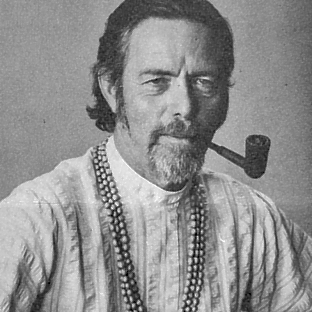
The Playful Nature of Existence
Alan Watts provocatively asserts that "Man suffers only because he takes seriously what the gods made for fun." This statement invites us to reconsider the weight we place on our daily struggles and the seriousness with which we approach life. By framing our existence as a playful creation of the divine, Watts encourages us to lighten our burdens and embrace a more joyful perspective. This shift in understanding can profoundly impact our experience of suffering, allowing us to navigate life with greater ease and grace.
In a world often dominated by stress and anxiety, Watts's words serve as a gentle reminder that much of our suffering stems from our attachment to seriousness. The gods, in this context, symbolize the playful, creative forces of the universe that invite us to engage with life as a dance rather than a battle. By recognizing the inherent playfulness in existence, we can cultivate a sense of wonder and curiosity, transforming our relationship with suffering into one of acceptance and exploration.
The image / the metaphor
At the heart of Watts's quote lies a vivid imagery that juxtaposes the divine and the human experience. The term "gods" evokes a sense of whimsy and creativity, suggesting that the universe is not a rigid structure but rather a playful canvas. The verbs "suffers" and "takes seriously" highlight the tension between our human inclination to impose gravity on our lives and the lightheartedness that the cosmos embodies. This contrast invites us to reflect on how we might be misinterpreting our experiences, mistaking the ephemeral for the eternal.
Diving deeper into the metaphor, we can see that Watts is not merely suggesting that life is a game but rather that our approach to it can be playful. When we take ourselves too seriously, we become entangled in a web of expectations, fears, and judgments. By embracing the notion that life is a playful creation, we can begin to see our challenges as opportunities for growth and exploration, rather than burdens to bear. This shift in perspective allows us to engage with our experiences more fully, fostering resilience and joy.
In the speaker's tradition
Alan Watts's insights are deeply rooted in Zen philosophy, which emphasizes the importance of perspective and the nature of reality. Concepts such as *sunyata* (emptiness) and *prajna* (wisdom) resonate with his assertion that our suffering arises from a misunderstanding of existence. In Zen, the idea of *kenosis*, or self-emptying, encourages us to release our attachments and preconceived notions, allowing us to experience life more fully and authentically. By recognizing the playful nature of existence, we align ourselves with the core tenets of Zen practice.
In his work, Watts often draws upon the teachings of the *Tao Te Ching*, where Laozi speaks of the importance of spontaneity and the natural flow of life. The text encourages us to embrace the world with a sense of wonder and playfulness, much like Watts's assertion that we should not take life too seriously. This alignment with ancient wisdom underscores the timeless relevance of Watts's message, inviting us to explore the depths of our existence with a light heart.
Living the teaching
Consider a modern scenario where the weight of expectations leads to stress and anxiety. Imagine a professional setting where deadlines loom and competition is fierce. In such an environment, individuals may become consumed by the seriousness of their tasks, leading to burnout and dissatisfaction. By applying Watts's teaching, one could approach their work with a sense of playfulness, viewing challenges as opportunities for creativity and collaboration rather than threats to their success. This shift in perspective can foster a more harmonious workplace, where individuals thrive rather than merely survive.
A reflection
As we contemplate Watts's assertion that "Man suffers only because he takes seriously what the gods made for fun," we are invited to reflect on our own lives. In what areas do we find ourselves burdened by seriousness, and how might we shift our perspective to embrace the playful nature of existence? This contemplative question encourages us to explore the balance between responsibility and play, inviting us to cultivate a sense of joy and wonder in our daily experiences.




Join the BrightStar Community
Stay connected with daily inspiration, event announcements, and community wisdom