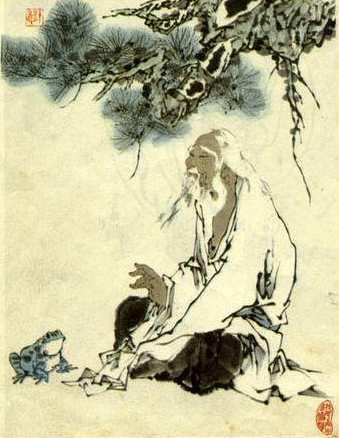
Embracing the Wholeness of Existence
Chuang Tzu's assertion, "It is in the lowest things, as well as in the highest," invites us to recognize the interconnectedness of all aspects of life. This profound statement suggests that both the mundane and the sublime hold equal significance in our spiritual journey. By acknowledging the value of the lowly alongside the lofty, we cultivate a deeper understanding of existence and our place within it. This perspective challenges us to transcend dualistic thinking and embrace a more holistic view of reality.
In a world often preoccupied with hierarchy and distinction, Chuang Tzu's wisdom serves as a gentle reminder that every experience, no matter how trivial it may seem, contributes to the tapestry of our lives. The invitation to find meaning in both the high and the low encourages us to engage with life fully, recognizing that wisdom can emerge from unexpected places. This teaching resonates deeply in our contemporary lives, where the pursuit of success and status can overshadow the beauty found in simplicity and humility.
The image / the metaphor
The imagery in Chuang Tzu's quote evokes a sense of balance and unity. The "lowest things" might conjure images of the earth, the mundane tasks of daily life, or the overlooked details that often escape our notice. In contrast, the "highest" suggests the ethereal, the transcendent experiences that elevate our spirits. The verbs chosen—"is"—imply a state of being that transcends judgment, inviting us to see all things as part of a greater whole. This felt sense of inclusivity encourages us to embrace every facet of our existence.
Diving deeper into the metaphor, we can see that the low and the high are not oppositional but rather complementary. The lowly aspects of life, often dismissed as insignificant, can provide grounding and context for our higher aspirations. In Taoist thought, this reflects the principle of yin and yang, where opposites coexist and inform one another. By recognizing the value in both extremes, we cultivate a richer, more nuanced understanding of our experiences, allowing us to navigate life with greater wisdom and compassion.
In the speaker's tradition
Chuang Tzu's teachings are rooted in the rich tapestry of Taoism, a tradition that emphasizes harmony with the Tao, or the fundamental nature of the universe. Central to this philosophy is the concept of wu wei, or effortless action, which encourages us to align with the natural flow of life rather than resist it. The recognition that the lowest and highest aspects of existence are intertwined resonates with the Taoist understanding of the interconnectedness of all things. This perspective invites us to embrace humility and simplicity as pathways to deeper wisdom.
In the text of the Zhuangzi, we find numerous anecdotes that illustrate the value of embracing both the high and the low. For instance, the story of the "Useless Tree" highlights how what may seem unremarkable can possess profound worth. This narrative echoes the sentiment of Chuang Tzu's quote, reminding us that wisdom often lies in the overlooked and the humble. By cultivating an appreciation for all aspects of life, we can align ourselves more closely with the Tao and experience a sense of peace and fulfillment.
Living the teaching
Consider a modern scenario where this teaching might resonate: a busy professional feeling overwhelmed by the demands of their career. In their pursuit of success, they may overlook the small joys of daily life—like a warm cup of tea or a moment of laughter with a colleague. By consciously shifting their focus to appreciate these "lowest things," they can cultivate a sense of balance and gratitude, allowing the high points of their career to be enriched by the simple pleasures that surround them.
In relationships, this teaching can manifest in moments of conflict or misunderstanding. When we find ourselves caught in the intensity of a disagreement, it can be easy to lose sight of the underlying connection we share with the other person. By recognizing the value of both our high emotions and the low moments of vulnerability, we can approach the situation with compassion and openness. This practice of embracing the full spectrum of our experiences fosters deeper connections and a more profound understanding of one another.
A reflection
As we contemplate Chuang Tzu's wisdom, we might ask ourselves: "In what ways can I honor both the low and high aspects of my life?" This question invites us to reflect on our daily experiences and consider how we might cultivate a more holistic perspective. By embracing the entirety of our existence, we open ourselves to a richer, more meaningful journey, one that acknowledges the beauty in both the mundane and the extraordinary.



Join the BrightStar Community
Stay connected with daily inspiration, event announcements, and community wisdom