The Illusion of Certainty: A Journey Through Perception
Chuang Tzu's assertion that "Things cannot be regarded as such because they are so. They are so because they are regarded as such" invites us to reconsider the very nature of reality and perception. This profound statement emphasizes that our understanding of the world is not an objective truth but rather a subjective interpretation shaped by our beliefs and experiences. In a society often obsessed with absolutes, this teaching serves as a gentle reminder of the fluidity of existence and the power of perspective.
By highlighting the relativity of perception, Chuang Tzu encourages us to explore the implications of our judgments and the labels we assign to our experiences. This inquiry is not merely philosophical; it has practical ramifications for how we navigate our lives and relationships. When we recognize that our perceptions shape our reality, we open ourselves to a more expansive understanding of truth, allowing for greater compassion, flexibility, and wisdom in our interactions with the world.
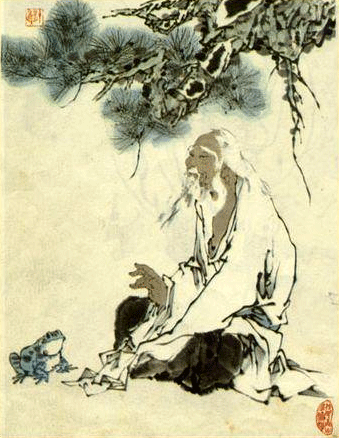
The image / the metaphor
The imagery in Chuang Tzu's quote evokes a sense of fluidity and transformation. The verbs "regarded" and "are" suggest a dynamic interplay between observer and observed, where the act of perception itself becomes a creative force. This notion challenges the static view of reality, inviting us to see that what we deem as "truth" is often a reflection of our own biases and experiences rather than an immutable fact. The quote paints a picture of reality as a canvas, where our thoughts and beliefs serve as the brushstrokes that shape the final image.
Diving deeper into the metaphor, we can see that the quote speaks to the heart of human experience: our interpretations are not merely passive reflections but active constructions. Just as an artist chooses colors and forms to convey meaning, we select the lenses through which we view our lives. This understanding encourages us to take responsibility for our perceptions, recognizing that they can either limit or liberate us. In this way, Chuang Tzu invites us to become conscious creators of our reality, rather than mere observers.
In the speaker's tradition
Chuang Tzu's insights are deeply rooted in the Taoist tradition, which emphasizes the interconnectedness of all things and the importance of aligning with the natural flow of the universe. Concepts such as wu wei (non-action) and yin-yang illustrate the balance and harmony inherent in existence, suggesting that our perceptions are but one aspect of a larger, ever-changing tapestry. The idea of sunyata or emptiness, found in Buddhist philosophy, resonates with Chuang Tzu's teaching, as it encourages us to let go of rigid attachments to our views and embrace the fluid nature of reality.
In the text of the Zhuangzi, we find numerous anecdotes that illustrate the relativity of perception. One such story involves a debate between two characters over the nature of a fish. Each character's understanding is shaped by their personal experiences and biases, highlighting that truth is often subjective. This narrative aligns with the broader Taoist perspective that wisdom lies not in clinging to fixed beliefs but in recognizing the multiplicity of viewpoints that coexist in the world.
Living the teaching
Consider a modern scenario where this teaching might resonate: a workplace conflict. Imagine two colleagues who have a disagreement over a project. Each perceives the other's intentions and actions through their own biases, leading to escalating tensions. By applying Chuang Tzu's insight, they could step back and recognize that their interpretations are not absolute truths but rather reflections of their own perspectives. This awareness could foster dialogue, allowing them to find common ground and resolve their differences with empathy and understanding.
In the realm of personal relationships, this teaching can be particularly transformative. When faced with a disagreement with a loved one, we often cling to our interpretations of the situation, convinced of our righteousness. However, by embracing the idea that our perceptions shape our reality, we can approach the conversation with curiosity rather than defensiveness. This shift allows for a deeper exploration of each other's viewpoints, paving the way for connection and healing rather than conflict.
A reflection
As we contemplate Chuang Tzu's profound statement, we are invited to reflect on the nature of our own perceptions. What beliefs or judgments do we hold that may be shaping our understanding of ourselves and the world around us? In recognizing the fluidity of our interpretations, we can cultivate a more open-hearted approach to life, one that embraces the complexity and richness of human experience. How might our lives change if we approached each moment with the awareness that our perceptions are not fixed, but rather invitations to explore deeper truths?




Join the BrightStar Community
Stay connected with daily inspiration, event announcements, and community wisdom