EveryEvent Denver

すべてのEventsを見る

Find every event in Denver

events

Concerts & Live Music
Festivals
Sports & Recreation
Food & Drink
Arts & Culture
Community
Family & Kids
Nightlife
Comedy
Theater
人気の目的地
BaliSedonaLos AngelesCosta RicaNew YorkSan FranciscoAustinMiamiJoshua TreeTulum
すべてのカテゴリを見るすべての目的地を見る

すべての機能を探索

イベントを成長させる強力なツール

プラットフォーム機能

スマートダイナミックプライシング
チケットカテゴリ
座席指定
カート放棄リカバリー
訪問者リカバリー
寄付とスライディングスケール
アフィリエイトシステム
チケットスキャナー
クーポンコード
カスタム質問
チケット共有
アップセルとアドオン
分析とレポート
メールシーケンス
ウェイトリスト / 通知 / リマインダー
探索
Discovery HubArtists & PerformersVenuesKnowledge Base
すべての機能を見る私たちについて
料金ブログ
Language
Saved events
すべてのイベントを見る

events

Concerts & Live MusicFestivalsSports & RecreationFood & DrinkArts & CultureCommunityFamily & KidsNightlife

人気の目的地

BaliSedonaLos AngelesCosta RicaNew YorkSan Francisco

探索

Discovery HubArtists & PerformersVenuesKnowledge Base

プラットフォーム機能

スマートダイナミックプライシングチケットカテゴリ座席指定カート放棄リカバリー訪問者リカバリー寄付とスライディングスケールアフィリエイトシステムチケットスキャナークーポンコードカスタム質問チケット共有アップセルとアドオン分析とレポートメールシーケンスウェイトリスト / 通知 / リマインダー
すべての機能を見る私たちについて
料金ブログ
ログイン新規登録イベント主催者
  • Browse All Events
  • Concerts & Live Music
  • Festivals
  • Sports & Recreation
  • Food & Drink
  • Arts & Culture
  • Community
  • Family & Kids
  • Nightlife
  • すべてのカテゴリ →
  • Boulder
  • Aspen
  • Colorado Springs
  • Vail
  • Breckenridge
  • All Destinations →
  • For Promoters
  • For Artists
  • For Venues
  • For Festivals
  • For Event Spaces
  • For Nonprofits
  • For Bloggers
  • For Speakers
  • Brand Ambassador
  • Case Studies
  • 35万人以上のバイヤーネットワーク
  • カート放棄リカバリー
  • スマートダイナミックプライシング
  • チケットカテゴリ
  • 定期イベント
  • 座席指定
  • アフィリエイトシステム
  • ウェイトリスト / 通知
  • チケットスキャナー
  • 埋め込みウィジェット
  • イベント配信
  • メッセージセンター
  • インテグレーション
  • レポート
  • すべての機能 →
  • 概要
  • エコシステム
  • ブログ
  • 用語集
  • インスピレーション
  • ヘルプセンター
  • お問い合わせ
  • APIドキュメント
  • ブランドアセット
  • 採用
  • プレス
  • 利用規約
  • プライバシーポリシー

Events

  • Browse All Events
  • Concerts & Live Music
  • Festivals
  • Sports & Recreation
  • Food & Drink
  • Arts & Culture
  • Community
  • Family & Kids
  • Nightlife
  • すべてのカテゴリ →

Getaways

  • Boulder
  • Aspen
  • Colorado Springs
  • Vail
  • Breckenridge
  • All Destinations →

For Organizers

  • For Promoters
  • For Artists
  • For Venues
  • For Festivals
  • For Event Spaces
  • For Nonprofits
  • For Bloggers
  • For Speakers
  • Brand Ambassador
  • Case Studies

機能

  • 35万人以上のバイヤーネットワーク
  • カート放棄リカバリー
  • スマートダイナミックプライシング
  • チケットカテゴリ
  • 定期イベント
  • 座席指定
  • アフィリエイトシステム
  • ウェイトリスト / 通知
  • チケットスキャナー
  • 埋め込みウィジェット
  • イベント配信
  • メッセージセンター
  • インテグレーション
  • レポート
  • すべての機能 →

会社

  • 概要
  • エコシステム
  • ブログ
  • 用語集
  • インスピレーション
  • ヘルプセンター
  • お問い合わせ
  • APIドキュメント
  • ブランドアセット
  • 採用
  • プレス
  • 利用規約
  • プライバシーポリシー
EveryEvent
© 2026 EveryEvent Denver. 全著作権所有.
Inspiration

Agarikon Strain 65: Searchingfor a Super Strain

Paul Stamets
Paul Stamets
Jun 14, 2020
読了 約8分
視聴 · 8

Paul Stamets discusses strain 65 of Agarikon (Fomitopsis officinalis), a rare medicinal mushroom with a long history of use in Europe and North America. Stamets has assembled the world's largest culture library of this species—65 strains total—and is using whole genome sequencing to identify a "super strain" with potent anti-inflammatory, antiviral, and immunomodulatory properties. The goal is to find a strain that could help humanity fortify immune defenses against pathogens, much like Mary Hunt's penicillin discovery saved millions of lives. Stamets treats this work as part of a centuries-long chain of knowledge custody, particularly urgent since Agarikon grows only in old-growth forests and faces extinction in Europe.

読む · 8セクション

Why Did Ancient Cultures Revere Agarikon?

Agarikon's appeal across cultures goes deeper than mere medicinal potency. Stamets points out that the mushroom naturally takes on anthropomorphic forms—shapes that resemble human anatomy. "It takes on anthropomorphic forms oftentimes resemble that of humans," he explains, noting "here's two legs, a little cute little butt." These distinctive shapes made the mushroom attractive for carving into figurative objects that were revered in many cultures. The combination of unusual form and proven medicinal power created a natural intersection between aesthetic interest and therapeutic application, which may explain why ancestors across Europe and North America were drawn to it as both a spiritual and healing artifact.

This dual appeal—form plus function—underscores a principle Stamets returns to throughout his work: nature's design often carries both symbolic and biochemical significance. The mushroom's resemblance to human figures was not incidental to its cultural adoption; it was a doorway into deeper engagement with its healing properties.

How Did Strain 65 Enter the Research Collection?

The acquisition of strain 65 reflects the conservation mission driving Stamets's broader research. An environmentalist named Marty contacted him with an unusual urgency: the old-growth forest where Agarikon grew was scheduled for clear-cutting within days. Stamets's initial instinct was to urge preservation—"please don't pick it"—but when faced with the reality of imminent forest loss, he shifted his approach. "The forest gonna be clear-cut in the next few days, and I said okay, good reason," Stamets recalls.

Marty, an experienced climber, undertook a dangerous ascent to harvest a single specimen. Rather than grow it in its original habitat or attempt to transplant it, Stamets employed a technique fundamental to his work: tissue cloning. "We then took a small piece of tissue we cloned it so we saved the strain even though now the forest has been cut." This methodological choice was deliberate—by isolating a living culture from the wild specimen, Stamets could preserve the genetic lineage indefinitely, creating an insurance policy against extinction. Strain 65 now lives as a living archive, a backup copy of biodiversity that might otherwise be lost to land clearing.

What Makes Agarikon Biochemically Unique?

Agarikon possesses a rare convergence of medicinal properties that few medicinal mushrooms display simultaneously. Stamets describes this combination as "a unique combination of attributes": anti-inflammatory activity, antiviral potency, and immunomodulatory effects. These three properties working together allow the mushroom to help humans "fortify their immune system to resist pathogens." Unlike plants or fungi with a single therapeutic strength, Agarikon addresses immune function from multiple angles—reducing excessive inflammation, inhibiting viral replication, and tuning immune response itself.

This layered therapeutic profile is why Stamets views strain hunting as potentially high-impact. Different strains of the same species can vary significantly in their bioactive compound profiles. One strain might be stronger in antiviral compounds; another might excel in anti-inflammatory polysaccharides. By cultivating and screening 65 different strains, Stamets is not seeking a minor improvement but rather the discovery of a strain whose combination of properties is genuinely transformative—a "super strain" capable of addressing immune challenges at scale.

What Is the "Super Strain" Model and Why Does It Matter?

Stamets frames his search through the historical precedent of Mary Hunt and penicillin. In 1943, Hunt, a laboratory technician working in Chicago, discovered a moldy cantaloupe contamination in a petri dish. Though Alexander Fleming had discovered penicillin's antibacterial properties in 1928, it was Hunt's specific mold strain—isolated from her cantaloupe—that proved suitable for mass cultivation and commercialization. "It was her strain of the moldy cantaloupe that led her to a super strain that allowed for the commercialization of penicillin to save literally millions of lives."

This historical analogy reveals the scaling problem in natural product research. Discovery of a compound's existence is not the same as discovery of a production-ready variant. Hunt's contribution was finding the strain that worked—the genetic line whose growth rate, yield, and stability made industrial manufacture possible. Stamets applies the same logic to Agarikon: the species has known medicinal properties, but among the 65 strains now in culture, one might possess the bioactive profile and robustness needed to become a meaningful therapeutic intervention at population scale.

He acknowledges the uncertainty: "Will this little guy be a super strain we don't know." But the methodology is sound. By conducting whole genome sequencing on each strain and comparing their anti-inflammatory, antiviral, and immunomodulatory activity, Stamets's team creates a searchable database of microbial diversity. One strain's genetic makeup will eventually reveal why it outperforms the others, a discovery that could unlock the pathway to cultivation and clinical development.

Why Is Agarikon Facing Extinction?

Agarikon exists in what Stamets calls a "bridge of extinction in Europe." The mushroom grows exclusively in old-growth forests—specifically on ancient trees in their native habitat. Old-growth forests are disappearing at an accelerating rate due to logging, development, and land conversion. As these forests vanish, wild Agarikon populations vanish with them.

This ecological fragility explains the urgency of Stamets's work. Unlike cultivated medicinal plants, which can be propagated in agricultural systems, Agarikon cannot be conventionally farmed. Its dependence on specific forest conditions means that once wild populations are gone, the species is effectively lost unless living cultures are preserved in laboratories. Stamets's culture library is not a backup file; it is a biological archive of the last remaining genetic diversity of this species. "We want to collect a genomic library of great microdiversity" precisely because the wild source cannot be assumed to exist in a few years.

What Is the "Chain of Custody of Knowledge" Stamets Describes?

Stamets positions his work within a historical continuum stretching back centuries. "I feel it's a thread of knowledge through the centuries through thousands of years," he explains. Indigenous peoples, medieval herbalists, and modern mycologists have all engaged with Agarikon, each generation learning something new about its properties and applications. Stamets sees himself not as the originator of this knowledge but as a temporary custodian of it.

"I'm just one micronaut of many in this long chain of custody of knowledge to help the commons." The use of "micronaut"—a term borrowed from science fiction meaning a pilot of microscopic scale—is deliberate. Stamets frames his individual contribution as tiny, even humble, within the vastness of ecological and human knowledge. His role is to preserve, advance, and pass forward what previous cultures discovered and what future generations will need. This custodial view reframes research not as individual achievement but as a relay race spanning centuries, with each participant responsible for handing the baton forward in better condition than they received it.

How Does Whole Genome Sequencing Enable Strain Selection?

The integration of genomic sequencing into Stamets's screening process represents the application of modern biotechnology to traditional ethnobotanical knowledge. Rather than relying solely on bioassays (testing anti-inflammatory or antiviral activity in lab conditions), the team now sequences the complete genetic code of each strain. This allows researchers to compare not just the phenotypic results—what the strain does—but the genotypic basis for those results—why it does it.

A strain with exceptional antiviral properties, for example, might express a unique cluster of genes encoding novel antimicrobial peptides or polysaccharides. Sequencing makes these genetic signatures visible. Over time, as multiple strains are sequenced and their bioactivity compared, patterns emerge: strain X lacks genes present in strain Y, and strain Y consistently shows stronger antiviral activity. This correlation between genetic content and therapeutic output creates a rational basis for identifying the super strain before it is even scaled for production. The candidate has already revealed its promise at the molecular level.

Where to Go From Here

For those interested in following this research, Stamets's ongoing strain library expansion and sequencing project continues under his mycological work. The implications extend beyond Agarikon: this model of systematic strain hunting, cultural preservation, and genomic screening could apply to dozens of other rare medicinal fungi and plants facing extinction. As climate change and land conversion accelerate habitat loss, the race to catalog and preserve microbial and fungal diversity becomes increasingly urgent.

The question Stamets poses is not merely scientific but ethical: if a super strain of Agarikon exists among these 65 cultures, and if its therapeutic potential could benefit millions, what responsibility do we bear to find it before the source populations disappear entirely? His work suggests that the answer lies not in either/or thinking—preservation or development—but in both: save the species while screening it for maximum human benefit, creating a feedback loop where conservation and medicine reinforce each other.
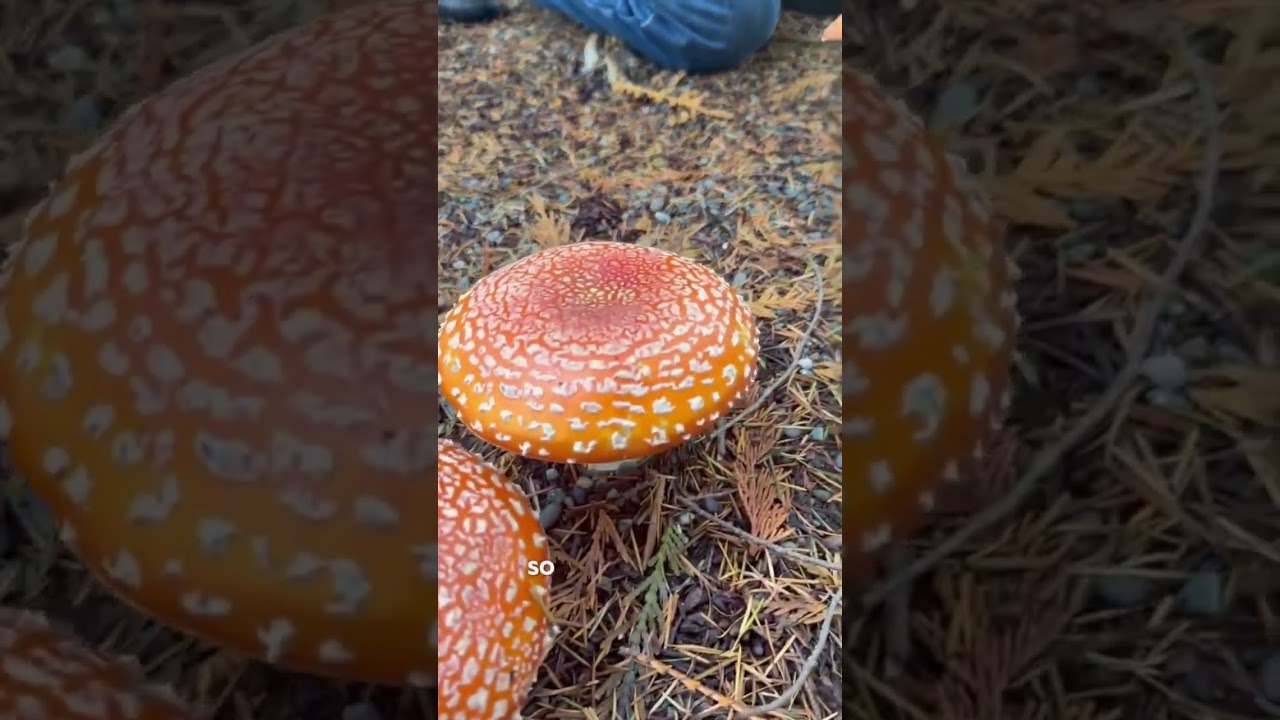
Transcript

[0:01] hi there this is paul samus and i'm with

[0:03] a friend of mine aguero khan foamy tops

[0:05] officialis

[0:06] it's had a long history of use uh by

[0:08] peoples in both in europe and as well as

[0:10] north america

[0:12] one of the things i think why our

[0:14] ancestors were attracted to this

[0:15] mushroom

[0:16] was it takes on anthropomorphic forms

[0:19] oftentimes resemble that of humans

[0:21] here's two legs a little cute little

[0:23] butt

[0:24] and um so

[0:27] these mushrooms been carved into figures

[0:30] and that have been revered in many

[0:32] cultures

[0:33] and we know it's very powerful as a

[0:35] medicinal mushroom so i think it's

[0:36] attractive human interest

[0:38] because of this anthropomorphically

[0:40] interesting forms to that of

[0:41] humans or animals and the fact that also

[0:44] has potent medicinal properties

[0:46] this mushroom we was sent to us by a

[0:49] lager

[0:50] environmentalist yes um and i said

[0:52] please don't pick it and he goes well

[0:53] the forest gonna be clear-cut in the

[0:55] next few days and i said okay

[0:57] good reason so marty bless you marty uh

[1:00] climbed

[1:00] up in a very dangerous situation he said

[1:03] he's an experienced climber

[1:05] uh and it was very difficult for him to

[1:07] acquire this but he acquired it we

[1:09] then took a small piece of tissue we

[1:11] cloned it so we saved the strain

[1:13] even though now the forest has been cut

[1:15] so this is something i'm passionate

[1:17] about

[1:17] we have 60 straight five strains of

[1:19] agaricon in culture currently

[1:21] we're looking for super strength these

[1:23] mushrooms have a very strong

[1:25] anti-inflammatory

[1:26] and anti and viral and immunomodulatory

[1:30] properties is a unique combination of

[1:33] attributes that can help

[1:34] humans fortify their immune system to

[1:36] resist pathogens

[1:38] so in the search of a super strain

[1:41] much like mary hunt mary hunt was a lab

[1:44] tech

[1:45] and working in chicago and her discovery

[1:49] of a moldy cantaloupe in 1943

[1:53] led to the commercialization of

[1:55] penicillin even though alexander fleming

[1:57] discovered it in 1928

[1:59] that penicillin and penicillium molds

[2:02] would inhibit staph bacteria

[2:04] it was her strain of the moldy

[2:06] cantaloupe that led her to a super

[2:08] strain

[2:08] that allowed for the commercialization

[2:10] of penicillin to save literally millions

[2:12] of lives

[2:13] we are in the search for a super strain

[2:15] of ageracon

[2:16] now will this little guy be a super

[2:18] strain we don't know

[2:19] but this is what i'm dedicating my life

[2:21] and my resources

[2:23] is to protect this species that's on the

[2:25] bridge of extinction in europe

[2:26] and only grows in the old growth forest

[2:28] we want to collect a genomic library of

[2:30] great microdiversity

[2:32] and look for super strains that have

[2:34] potent anti-inflammatory antiviral

[2:37] and immunosupporting properties so this

[2:40] is what i'm passionate about

[2:41] and i feel it's a thread of knowledge

[2:44] through the centuries through thousands

[2:45] of years

[2:46] and so i'm just one micronaut of many in

[2:49] this long chain

[2:50] of custody of knowledge to help the

[2:52] commons so

[2:53] let's celebrate nature together

[2:57] and you too thank you

[3:10] you

Paul Stamets
著者Paul Stamets

Mycologist and advocate who has dedicated his life to studying mushrooms and their transformative potential to heal people and restore the planet through medicine, agriculture, and…

プロフィールを見るウェブサイト
トピックを見る
Medicinal-mushroomsAgarikonStrain-huntingMycologyOld-growth-forests

ご質問はありますか?

よくある質問

Agarikon (Fomitopsis officinalis) is a medicinal mushroom with a long history of use in Europe and North America. Ancient cultures were attracted to it partly because it naturally forms anthropomorphic shapes resembling human bodies, making it aesthetically appealing for carving into figures, and partly because it possesses potent anti-inflammatory, antiviral, and immunomodulatory medicinal properties. This combination of form and function made it spiritually and therapeutically significant.
Strain 65 was collected from an old-growth forest scheduled for clear-cutting. Rather than allow this genetic lineage to be lost, Paul Stamets's team performed tissue cloning on a small specimen, creating a living culture that can be preserved indefinitely. This technique saved the strain's genetic information after the wild forest was destroyed.
A super strain is a specific genetic line within a species that combines desired traits at exceptional levels. Stamets's model follows Mary Hunt's discovery of a penicillin-producing mold strain that enabled mass production and saved millions of lives. Among 65 Agarikon strains in culture, one might possess an optimal combination of anti-inflammatory, antiviral, and immune-boosting properties suitable for therapeutic scale-up.
Agarikon grows only on ancient trees in old-growth forests. As these forests are logged and cleared, wild populations vanish. The mushroom cannot be conventionally farmed, so once wild forests are gone, the species can only survive in laboratory cultures, making preservation of genetic diversity urgent.
Whole genome sequencing reveals the genetic basis for each strain's therapeutic properties. By comparing the complete genetic codes of all 65 strains alongside their measured anti-inflammatory, antiviral, and immunomodulatory activity, researchers can identify genetic signatures that correlate with superior performance, allowing rational selection of the most promising candidate before it is scaled for production.
Stamets describes his work as part of a centuries-long relay of knowledge about Agarikon stretching from indigenous peoples through medieval herbalists to modern mycologists. He sees himself as a temporary custodian responsible for preserving, advancing, and handing forward this knowledge in better condition than he received it, framing research as a multigenerational responsibility to help humanity rather than personal achievement.

読みつづける

More from Paul

すべて表示
Amanita Muscaria: History, Identification & Safety of Fly Agaric
Featured

Amanita Muscaria: History, Identification & Safety of Fly Agaric

Amanita muscaria, the fly agaric, has ancient roots in pest control and cultural mythology. Despite its striking beauty, this mushroom poses…

1 min read
Lactarius Deliciosus: Identifying & Foraging the Saffron Cap
Featured

Lactarius Deliciosus: Identifying & Foraging the Saffron Cap

The saffron milk cap (Lactarius deliciosus) is an easy-to-identify edible mushroom with striking green staining and orange milk. Learn how t…

1 min read
How Sitting Still Proves You're Already Awakening
Featured

How Sitting Still Proves You're Already Awakening

Most people can't sit quietly without discomfort, but if you can, you're already further along spiritually than you realize. Eckhart Tolle e…

1 min read
The Missing Piece: How Real Thinking Creates Real Results
Featured

The Missing Piece: How Real Thinking Creates Real Results

Most vision boards fail because people skip the actual thinking. Eckhart Tolle reveals the rhythm that unlocks insight and the two distinct …

1 min read

探索を続ける

旅をつづける

BrightStarのディレクトリから、さらなる智慧と集いを。

もっと記事を読む

教え、インタビュー、ガイドのライブラリ全体をご覧ください。

すべての記事に戻る →

講師とアーティスト

コンシャスな世界の系譜、音楽家、導き手を探しましょう。

アーティストを探す →

イベントを見つける

キルタン、リトリート、サウンドバス、ブレスワーク、フェスティバル — まもなく開かれます。

イベントを見る →