EveryEvent Denver

Ver todos os Events

Find every event in Denver

events

Concerts & Live Music
Festivals
Sports & Recreation
Food & Drink
Arts & Culture
Community
Family & Kids
Nightlife
Comedy
Theater
Destinos populares
BaliSedonaLos AngelesCosta RicaNew YorkSan FranciscoAustinMiamiJoshua TreeTulum
Ver todas as categoriasVer todos os destinos

Explorar todos os recursos

Ferramentas poderosas para expandir seus eventos

Recursos da plataforma

Precificação dinâmica inteligente
Categorias de ingressos
Lugares marcados
Recuperação de carrinho abandonado
Recuperação de visitantes
Doações e preço variável
Sistema de afiliados
Scanner de ingressos
Códigos de desconto
Perguntas personalizadas
Compartilhamento de ingressos
Upsells e adicionais
Análises e relatórios
Sequências de e-mail
Lista de espera / Notificar / Lembrar
Explorar
Discovery HubArtists & PerformersVenuesKnowledge Base
Ver todos os recursosSobre nós
PreçosBlog
Language
Saved events
Ver todos os eventos

events

Concerts & Live MusicFestivalsSports & RecreationFood & DrinkArts & CultureCommunityFamily & KidsNightlife

Destinos populares

BaliSedonaLos AngelesCosta RicaNew YorkSan Francisco

Explorar

Discovery HubArtists & PerformersVenuesKnowledge Base

Recursos da plataforma

Precificação dinâmica inteligenteCategorias de ingressosLugares marcadosRecuperação de carrinho abandonadoRecuperação de visitantesDoações e preço variávelSistema de afiliadosScanner de ingressosCódigos de descontoPerguntas personalizadasCompartilhamento de ingressosUpsells e adicionaisAnálises e relatóriosSequências de e-mailLista de espera / Notificar / Lembrar
Ver todos os recursosSobre nós
PreçosBlog
EntrarCadastrarOrganizadores de eventos
  • Browse All Events
  • Concerts & Live Music
  • Festivals
  • Sports & Recreation
  • Food & Drink
  • Arts & Culture
  • Community
  • Family & Kids
  • Nightlife
  • Todas as categorias →
  • Boulder
  • Aspen
  • Colorado Springs
  • Vail
  • Breckenridge
  • All Destinations →
  • For Promoters
  • For Artists
  • For Venues
  • For Festivals
  • For Event Spaces
  • For Nonprofits
  • For Bloggers
  • For Speakers
  • Brand Ambassador
  • Case Studies
  • Rede de 350K+ compradores
  • Recuperação de carrinho abandonado
  • Precificação dinâmica inteligente
  • Categorias de ingressos
  • Eventos recorrentes
  • Lugares marcados
  • Sistema de afiliados
  • Lista de espera / Notificar
  • Scanner de ingressos
  • Widget incorporável
  • Distribuição de eventos
  • Central de mensagens
  • Integrações
  • Relatórios
  • Todos os recursos →
  • Sobre
  • O ecossistema
  • Blog
  • Glossário
  • Inspiração
  • Central de ajuda
  • Contato
  • Documentação da API
  • Recursos da marca
  • Carreiras
  • Imprensa
  • Termos de Serviço
  • Política de Privacidade

Events

  • Browse All Events
  • Concerts & Live Music
  • Festivals
  • Sports & Recreation
  • Food & Drink
  • Arts & Culture
  • Community
  • Family & Kids
  • Nightlife
  • Todas as categorias →

Getaways

  • Boulder
  • Aspen
  • Colorado Springs
  • Vail
  • Breckenridge
  • All Destinations →

For Organizers

  • For Promoters
  • For Artists
  • For Venues
  • For Festivals
  • For Event Spaces
  • For Nonprofits
  • For Bloggers
  • For Speakers
  • Brand Ambassador
  • Case Studies

Recursos

  • Rede de 350K+ compradores
  • Recuperação de carrinho abandonado
  • Precificação dinâmica inteligente
  • Categorias de ingressos
  • Eventos recorrentes
  • Lugares marcados
  • Sistema de afiliados
  • Lista de espera / Notificar
  • Scanner de ingressos
  • Widget incorporável
  • Distribuição de eventos
  • Central de mensagens
  • Integrações
  • Relatórios
  • Todos os recursos →

Empresa

  • Sobre
  • O ecossistema
  • Blog
  • Glossário
  • Inspiração
  • Central de ajuda
  • Contato
  • Documentação da API
  • Recursos da marca
  • Carreiras
  • Imprensa
  • Termos de Serviço
  • Política de Privacidade
EveryEvent
© 2026 EveryEvent Denver. Todos os direitos reservados.
Inspiration

Is the KamasutraPornography? Ancient Sexuality

Sadhguru
Sadhguru
Dec 23, 2015
5 min de leitura

The Kamasutra is commonly mistaken for pornography in the West, but it was actually a practical textbook on sexuality written in ancient India—a culture that approached sexuality without the moral framework characteristic of later religious traditions. Unlike pornography, which aims to arouse, the Kamasutra treated sexuality as simply another aspect of human life, worthy of systematic study and documentation. Understanding this distinction requires recognizing how cultural attitudes toward the body and desire have fundamentally shaped what we see as obscene or educational.

Leitura · 6 seções

What is the Kamasutra, and why is it misunderstood as pornography?

The Kamasutra is widely dismissed or titillated as an ancient sex manual, yet this characterization misses the text's actual purpose and context. The work emerged from a culture—ancient India—that did not apply moral judgment to sexuality in the way later religious societies did. Sexuality was viewed not as sinful, shameful, or inherently problematic, but simply as one aspect of human existence, alongside eating, sleeping, and social interaction.

Pornography, by definition, is created with the explicit intent to arouse sexual desire. The Kamasutra, by contrast, was written as a systematic textbook—a practical guide that documented approaches to sexuality with the same clinical detachment one might find in a manual on architecture, medicine, or governance. The confusion between the two reflects a modern Western lens applied retroactively to an ancient text that was never conceived within a framework of moral prohibition.

How did ancient Indian culture view sexuality differently?

Ancient India operated without the moral superstructure that later religions—particularly those that migrated into or influenced the region—imposed on the body and desire. This does not mean the culture was hedonistic or without ethics; rather, it means sexuality was not categorized as inherently sinful or requiring suppression. Life's pursuits were organized into clear categories: dharma (duty and righteousness), artha (material prosperity), kama (desire and pleasure), and moksha (liberation). Kama—which encompasses sexuality—was a legitimate domain of human experience, worthy of knowledge and skillful practice.

This non-judgmental framework allowed for the creation of instructional texts on sexuality without the shrouding in shame or secrecy that characterizes such material in morally rigid societies. A textbook on sexuality in ancient India served the same function as a textbook on any other human activity: to provide knowledge that could improve one's competence and understanding.

Why is systematic documentation of sexuality not the same as pornography?

The Kamasutra employs the language of instruction, categorization, and practical methodology. It describes techniques, variations, and contexts with the precision one might expect from a technical manual. This systematic approach—far from being prurient—indicates a fundamentally different intention than pornography. Pornography aims at emotional and physiological arousal; it is designed to trigger desire and response. Documentation, by contrast, aims at clarification and knowledge.

Consider an analogy: a medical textbook containing illustrations of human anatomy, including reproductive organs and their function, is not considered pornographic, despite depicting nudity and sexual anatomy. The difference lies in intent and context. The same is true of the Kamasutra—it treats sexuality as a subject of study, not as material designed to provoke arousal.

What does the cultural context reveal about how we label things as obscene?

The classification of the Kamasutra as pornography reveals more about the viewer's culture than about the text itself. Societies shaped by religious traditions that sacralize chastity, demonize desire, and shroud the body in shame will inevitably perceive systematic documentation of sexuality as transgressive or obscene. What appears clinical in one context appears scandalous in another, not because the object has changed, but because the observer's cultural framework has.

This labeling reflects what might be called "moral projection"—the assumption that a text created in a context of non-judgment must somehow be addressed to those living in a context of judgment, and therefore must be designed to circumvent or subvert their morality. This misses the fundamental point: the Kamasutra was created by and for a culture that did not carry the same burden of sexual shame.

How does understanding this distinction matter today?

Recognizing that the Kamasutra is not pornography—and that it emerged from a radically different relationship to the body and desire—invites reflection on how modern societies relate to sexuality. The conflation of systematic knowledge with prurient intent suggests a culture still operating under layers of moral anxiety about desire itself. In a truly mature relationship to sexuality, knowledge and instruction would not automatically be suspect; they would be valued as part of a complete human education.

The ancient Indian framework did not eliminate problems or harm; like all human systems, it had its own contradictions and failures. But it did permit the creation of knowledge about sexuality without the distorting lens of shame. That possibility—that one could write about sexuality without the intent to corrupt or arouse—seems almost unthinkable in modern Western contexts, where any sustained attention to sexual technique or pleasure is quickly categorized as either academic (and therefore stripped of relevance) or pornographic (and therefore dismissed as crude).

Where to go from here

For those interested in understanding the Kamasutra beyond its popular caricature, approaching it as a historical and cultural document—rather than as either a salacious text or a manual of technique—opens new possibilities. It becomes a window into how different societies organize knowledge, how they relate to the body, and what they consider worthy of systematic study. The text also raises broader questions: How does shame shape what we can and cannot know? What would a non-judgmental approach to human sexuality look like in contemporary education and culture? And what might we gain by examining, without moral panic, the full spectrum of human experience?

Sadhguru
AutorSadhguru

Indian yogi, mystic, and founder of the Isha Foundation. Through his programs (Inner Engineering, Bhava Spandana, Samyama) and books, he has introduced millions worldwide to a cont…

Ver perfilSite
Explorar temas
KamasutraSexuality-cultureAncient-indiaShame-moralitySexual-knowledge

Tem perguntas?

Perguntas frequentes

No. The Kamasutra is a systematic textbook on sexuality created in ancient India, a culture without the moral judgment applied to desire in later religious societies. While pornography is designed to arouse, the Kamasutra treats sexuality as a legitimate subject of practical instruction, similar to manuals on other aspects of human life.
Ancient Indian culture did not categorize sexuality as sinful or shameful. Instead, kama (desire and pleasure) was recognized as one of four legitimate life pursuits alongside dharma (duty), artha (prosperity), and moksha (liberation). This framework allowed sexuality to be documented systematically without the moral prohibition found in later religious traditions.
Documentation aims at clarification and knowledge through systematic, clinical presentation—like a medical textbook. Pornography, by contrast, is intentionally designed to trigger arousal and emotional response. The Kamasutra uses the language of instruction and categorization, not the language of seduction or stimulation.
Labeling the Kamasutra as pornographic reflects the viewer's own cultural anxiety about sexuality and desire. Societies shaped by traditions that shame the body and demonize pleasure tend to perceive any sustained, non-condemning attention to sexuality as transgressive or obscene, which says more about their moral framework than about the text itself.
Yes. The ancient Indian model demonstrates that one can approach sexuality without moral panic or shame, creating space for knowledge and understanding. This suggests possibilities for how modern societies might relate to sexuality—not by eliminating ethical concerns, but by separating instruction and knowledge from judgment and secrecy.

Continuar lendo

More from Sadhguru

Ver Tudo
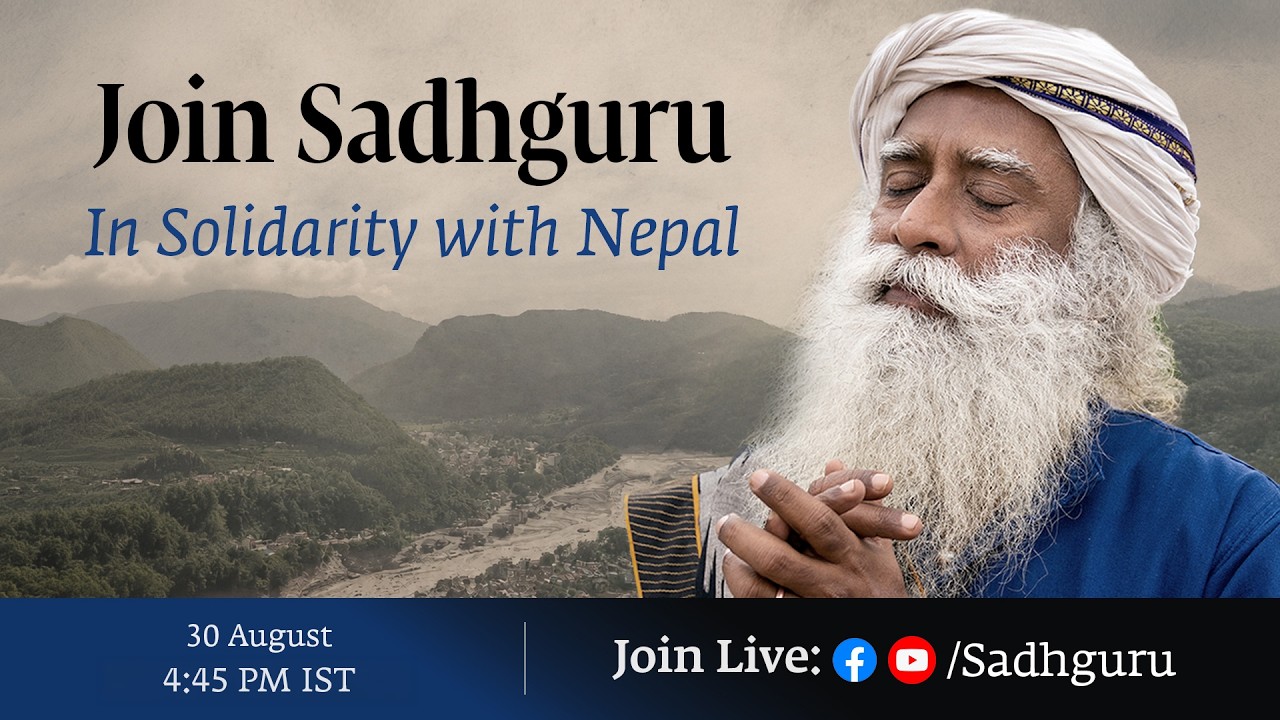
When Grief Becomes a Mirror: What the Nepal Floods Teach
Featured

When Grief Becomes a Mirror: What the Nepal Floods Teach

A flash flood on the Nepal-Tibet border devastated communities and claimed lives. This event became a moment to examine how we respond to tr…

1 min read
Mount Kailash's Hidden Dimensions: Mystical Phenomena Beyond Logic
Featured

Mount Kailash's Hidden Dimensions: Mystical Phenomena Beyond Logic

A 21-year pilgrimage reveals Mount Kailash and Lake Manasarovar as repositories of consciousness and extraordinary life forms defying conven…

1 min read
Relax Into Happiness: The Art of Letting Go
Featured

Relax Into Happiness: The Art of Letting Go

A guided meditation practice that reveals happiness as something already present, accessed through softening the body and releasing the effo…

1 min read
Self-Grasping and Offering Compassion Through Chanting
Featured

Self-Grasping and Offering Compassion Through Chanting

Krishna Das and Nina Rao explore how chanting and mantra practice dismantle the self-centered mind and cultivate bodhicitta—the intention to…

1 min read

Continue explorando

Continue sua jornada

Mais sabedoria e mais encontros de todo o diretório BrightStar.

Mais artigos

Explore a biblioteca completa de ensinamentos, entrevistas e guias.

Voltar a todos os artigos →

Professores e artistas

Conheça as linhagens, os músicos e os guias do mundo consciente.

Explorar artistas →

Encontre um evento

Kirtan, retiros, banhos de som, breathwork, festivais — acontecendo em breve.

Ver eventos →